
“It is basically a year since we moved to Loop. In summary: best decision ever… the model you build of being tech enabled but have a human in the center of your customer relationship is SUPER. Looking forward to year 2 with Loop.”
Founded in Vienna in 2019, HelloBello makes vet-developed, freshly cooked dog food, frozen rather than preserved. A customer signs up by describing their dog; the system calculates that dog’s energy needs and builds the plan around it.
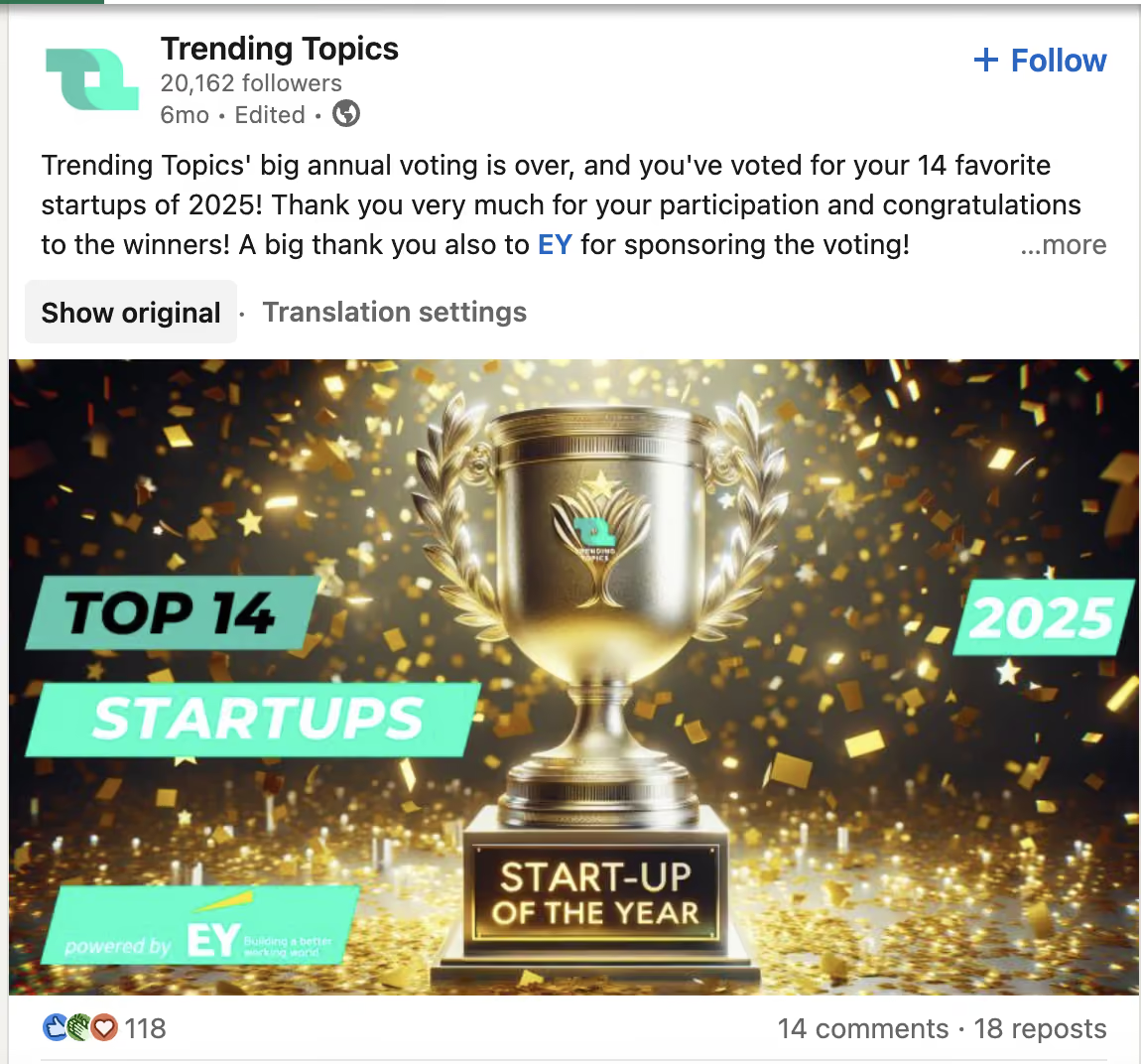
The brand ships across Austria, Germany and Switzerland, raised a €4M Series A at the start of 2025, and was voted Startup of the Year in the food tech category in Trending Topics’ annual public vote.
Most brands take the subscription platform’s portal as a given. Configure it, brand it, live with its shape. HelloBello wanted the opposite.
When a plan is a calculation for a specific dog, the interface has to speak that language — portions in grams, recipes by name, delivery dates that mean something to someone standing in front of a freezer. That belongs in the brand’s own front end.
“We’re a 100% subscription-focused company with a strong commitment to delivering exceptional products and a seamless digital customer experience.”
Which narrows the platform question to a technical one. Not “how good is the portal?” but “what can I do without it?” Pause, skip, reschedule, swap a recipe, change a quantity, cancel — every action has to be an endpoint, behave predictably, and write back cleanly enough that reporting still tells the truth.
Recharge is the category leader and the default choice, and HelloBello had built on it. Leaving the default mid-growth, with a live subscriber base in three countries, is not a light decision. They made it for one reason.
“Superior access to development and customer support: Loop provides outstanding access to their development and customer service teams. This is crucial as we develop our API-based customer dashboard. Unlike with Recharge, where each interaction involved a new representative requiring repeated explanations, Loop offers direct engagement with the team who can readily assist with our API needs.”
Headless sounds like a front-end project. It is really a test of the platform underneath: stop using the hosted portal, and every gap in the API becomes a feature you cannot ship. Three things had to hold.
A subscriber manages their dog’s plan inside the brand’s own interface — same design system, same language, same tone as the rest of the site. Nothing hands off to something that looks like software.
Behind each control is a Loop API call. Move the next delivery, skip a cycle, adjust a portion, swap a recipe, update a card. For a frozen-goods brand, timing control is the retention feature: people leave because they’re travelling, or the freezer is full, not because they stopped believing in the food.
Built the same way — their front end, Loop’s API. The reasons a subscriber picks, the branching, and the alternative offered at each branch are all HelloBello’s own logic.
Which matters because the alternatives have to fit the category. Someone pausing before a holiday is a different subscriber from someone whose dog changed diet. Because pause, skip and reschedule are all API actions, each route has somewhere to go that isn’t cancellation.
Webhooks push changes out to the rest of the stack as they happen. When the team needed something the API didn’t expose yet, they asked for it.
“Rapid development capabilities: Loop demonstrated impressive agility in responding to our requests. Features like Make.com access, Loyalty Lion integration, and API enhancements were implemented within days or weeks,far exceeding the responsiveness we experienced with Recharge.”
The Shopify integration mattered for the same reason — fewer moving parts between the subscription record and the store it lives in.
“Seamless Shopify integration: As a Shopify-based business, we appreciate Loop’s native integration. This translates to smoother operation, better integration, and faster development cycles compared to Recharge’s non-native solution.”
The build only mattered if the move underneath it worked.
“Our migration process was complex, involving two PayPal accounts, Stripe as our primary gateway, and residual activity on Braintree. Despite the challenges, the Loop team went above and beyond to ensure a smooth transition. They actively collaborated with us until all issues were resolved,demonstrating a genuine commitment to exceeding expectations.”
Three payment surfaces, one live subscriber base, and no acceptable version of a charge going wrong. Add personalised portions, mixed-recipe line items and two cadences across three markets, and the mapping mattered more than the export — plans written under older rules are exactly the records that migrate quietly wrong.
The stakes were customer trust, not data hygiene. A dog owner who opens the freezer and finds the wrong amount of food doesn’t file a ticket about a migration. They cancel.
What he keeps returning to, though, isn’t a feature.
“Shared DNA and dedicated support: We resonate with Loop’s entrepreneurial spirit and their commitment to building long-term partnerships. We have established relationships with key personnel at Loop, ensuring 24/7 support and personalized attention to our needs. This stands in stark contrast to the frustrating experience we had with our past subscription provider, which often felt impersonal and unresponsive.”
“HelloBello wholeheartedly recommends Loop. Their dedication to customer success, agility, and focus on our needs make them a truly exceptional partner.”
If you’re considering going headless on subscriptions, the question isn’t whether a platform has an API. Almost all of them do. It’s whether the API covers every action a subscriber can take, whether those actions write back cleanly enough that your reporting stays accurate, and whether the endpoint you need next gets built in a timeframe your roadmap can absorb.
HelloBello’s model is about as demanding as subscription commerce gets: per-animal calculations, mixed recipes, two cadences, three markets, perishable goods, and a payment estate spread across three providers. Loop’s API carried all of it — not as a set of endpoints to work around, but as the foundation the brand built their own product on.
The sequence is worth borrowing. Decide what you want to own. List the actions that requires. Then make the platform prove it can carry them before you move a single subscriber.