“Great app and wonderful support! We’ve grown subscriptions 30% in the ~7 months we’ve been working with Loop, and we’re only accelerating.”
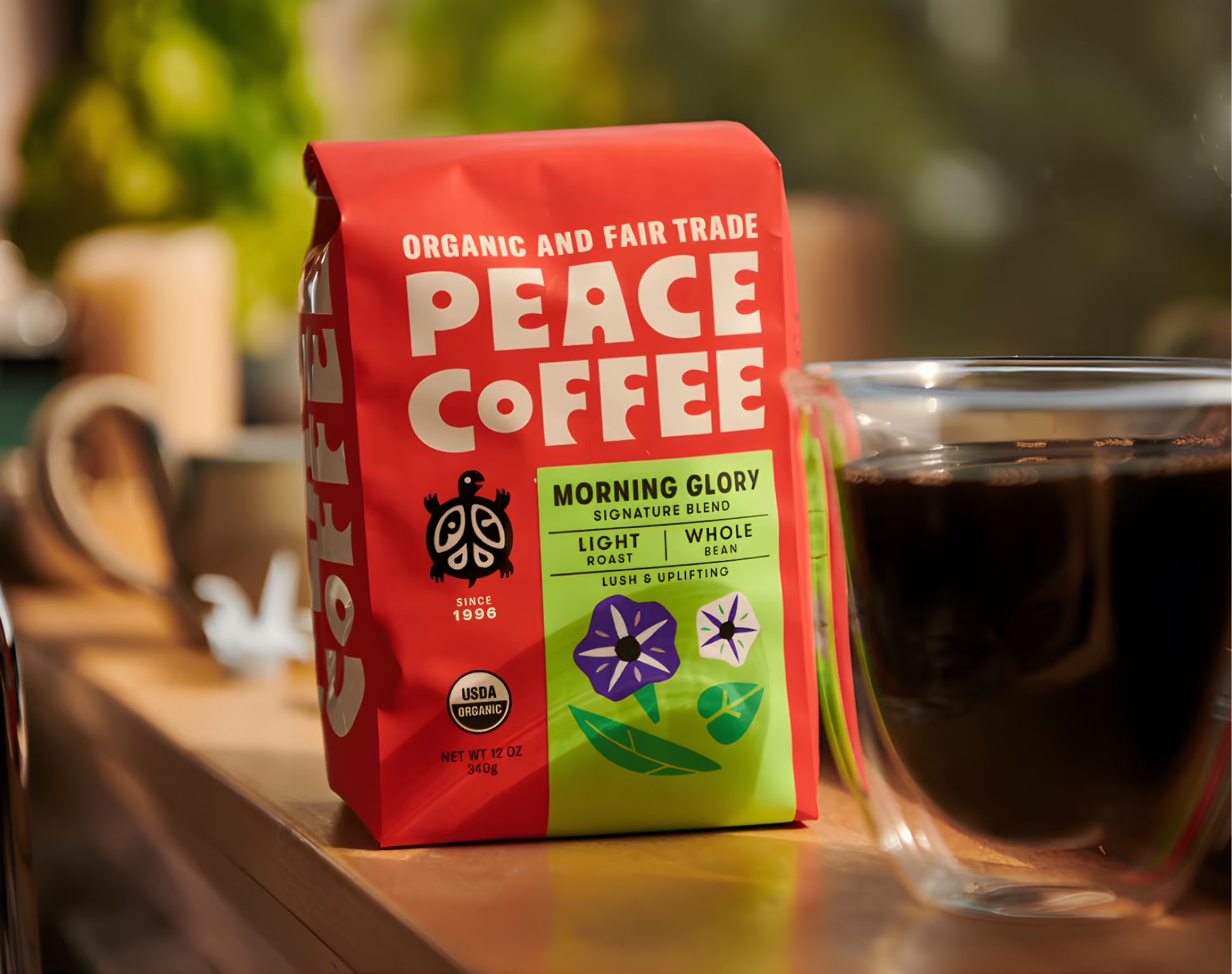
Peace Coffee has been roasting organic, fair trade coffee in Minneapolis since 1996 - a Certified B Corp that buys from farmer-owned co-ops and still moves a share of Twin Cities orders by bicycle. Coffee is close to a perfect subscription category, and DTC subscriptions are now the part of the business the team watches most closely.
Which is why churn here isn’t an abstract dashboard number. Recurring revenue is what lets the brand commit to co-ops ahead of a harvest. A subscriber who takes one heavily discounted bag and disappears doesn’t just cost a future order - they cost the order they already took.
From the top of the funnel, things looked fine. Sign-ups were coming in. The subscriber count was moving in the right direction. Underneath that, two problems were quietly cancelling out the growth.
The subscription plan led with 40% off the first order. It worked — on the metric it was designed for. People signed up. But a meaningful share of them churned on day zero or before order two ever billed. The offer was recruiting deal-seekers and reading them as subscribers.
Every one of those first orders was a real bag of fair-trade coffee: sourced at a premium, roasted, bagged, often bike-delivered. The team was absorbing the most expensive order in the lifecycle for customers who never reached the profitable ones. That isn’t a retention problem. It’s a margin leak wearing a growth costume.
When a subscriber went to cancel, they hit a benefits page — a wall of text listing reasons to stay — followed by short, generic offer copy. Subscribers scrolled past it. There was no structured incentive sitting at the point in the lifecycle where churn actually spiked. The flow was live, and it was saving almost no one.
Three moves, made in the order the churn showed up: fix the front door, hold the middle, then work the exit.
The old structure front-loaded the entire incentive. A subscriber got maximum value on order one and had no financial reason to be there for order two. The discount was doing acquisition work and no retention work at all.
Peace Coffee inverted it: 26% off each of the first three orders. Same generosity, spread across the window where subscribers actually decide whether this is a habit. The incentive now pays out over the decision, not before it.
.png)
The metric to watch for a change like this is 0-day churn contribution - the share of all cancellations that happen the same day the subscription starts. It isolates exactly the behaviour a front-loaded discount produces: someone who wanted the bag, not the subscription.
In that first month on Loop, same-day cancellations made up 7.14%. By June 2025 it was 1.56% — roughly a fifth of where it started.
The overall subscriber churn rate over those same months sat between 1.34% and 2.71%, so the day-zero share wasn’t falling because total churn collapsed underneath it. Fewer of the people leaving were leaving on the first day. The churn that remained was ordinary lifecycle churn — the kind a save offer or a reward can actually work on.
What they measured: 0-day churn contribution 78% lower — from 7.14% in Jan 2025 to 1.56% in June 2025 — against an overall subscriber churn rate that stayed inside a 1.34–2.71% band across the same window.
Streaks is a program subscribers are enrolled in: keep consecutive orders running and rewards unlock along the way. What Peace Coffee decided was where on that track the rewards should sit.
Reporting in Loop showed where subscribers were actually leaving — churn spiked after the second and third orders. The instinct in most programs is to put a little value on every order. Peace Coffee set the unlocks further down the track instead: a discount at order 3, a gift at order 4, right on the cliff edge.
A subscriber one order in opens the portal and sees exactly what they’re two and three orders away from. It sits above the skip and reschedule buttons, so it’s in front of them at the precise moment they’re considering stepping back.
.png)
What they measured: the January 2026 cohort — 400 new subscribers, acquired at roughly twice the brand’s historical rate — retained at 84.8% through Month 1, the highest Month-1 cohort retention the team had recorded in the prior six months.
The benefits page was the weakest link in the flow, so they replaced its core: out went the list of reasons to stay, in went a short video from the CEO speaking directly to the subscriber. Not a brand film. A person at a table with a mug, saying thank you and then asking.
The shift from reading to watching changed how subscribers moved through the step. A bulleted list is something you scroll past. Someone looking at you and asking you to stay is something you sit through.
They rewrote the offer copy in the same pass — from short and vague to specific about what the subscriber would get, why it mattered, and what leaving would cost them.
.png)
What they measured: save rates in the cancellation flow rose from ~16% in November 2025 to ~25% in February 2026, climbing month over month across that window.
The most useful part of this story isn’t any single number. It’s that the retention numbers held while acquisition roughly doubled - a combination most operators expect to have to trade against.
All figures above are Peace Coffee’s own, measured after implementation. Results reflect Peace Coffee’s measured experience; outcomes vary by brand, vertical, product, and implementation.