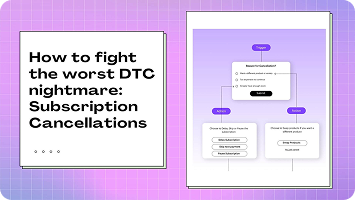
.avif)

Check your subscription dashboard this morning. Somewhere in the data, two subscribers are gone.
The first one—let's call her Sarah—clicked "Cancel subscription" because she had too much product sitting on her shelf. She didn't hate your brand. She just needed a skip button that didn't exist.
The second—let's call him Marcus—didn't do anything at all. His credit card expired last Tuesday. Your system tried to charge it, failed, tried again three days later, failed again, and quietly marked his subscription as cancelled. Marcus still thinks he's subscribed. He'll find out when his protein powder doesn't show up next week.
Sarah is voluntary churn. Marcus is involuntary churn. They both show up as "cancelled" in your analytics—but they require completely different solutions. And if you're treating them the same way, you're leaving serious revenue on the table.
Here's the scope of the problem: according to Recurly's churn rate benchmarks (based on data from thousands of subscription businesses), the average overall monthly churn rate sits around 3.4%, with voluntary churn at approximately 2.5% and involuntary churn contributing roughly 0.9%. Meanwhile, Slicker's 2025 failed-payment benchmarks estimate the global cost of involuntary churn at $129 billion annually. For a Shopify brand doing $500K in annual recurring revenue, even a modest churn rate means tens of thousands of dollars walking out the door every month—some of it entirely preventable with the right diagnosis.
This guide breaks down exactly how to tell which type of churn is killing your subscription revenue, why the distinction matters more than your overall churn rate, and how to fix both—with the specific Loop Subscriptions features that make each fix possible.
Most Shopify subscription brands track one number: churn rate. Subscribers lost divided by subscribers active. But that single number hides the most important insight in your entire subscription business—whether your subscribers are choosing to leave or being forced out.
Voluntary churn happens when subscribers actively decide to cancel. They click "Cancel subscription" in their customer portal, select a reason, and walk away. Common triggers include having too much product, finding it too expensive, wanting a different product, needing a temporary break, or feeling the product didn't meet expectations.
Involuntary churn happens when subscribers are lost due to failed payments—expired cards, insufficient funds, bank declines, or processing errors. The subscriber never intended to leave. They might not even know they've been cancelled until their next delivery doesn't arrive.
The reason this distinction changes everything is that each type requires a fundamentally different solution. Throwing a 20% discount at Marcus won't help—his card is expired. Building the world's best cancellation flow won't save Marcus either. And retrying Sarah's payment fifteen times won't change the fact that she has too much product on her shelf. As Paddle's research puts it: you don't need to change your product to address involuntary churn—you need to fix your payment infrastructure. And you can't fix voluntary churn with payment retries—you need to fix the subscriber experience.
When you look at churn this way, a clear priority emerges: involuntary churn is often the easier and faster win, because the subscriber already wants to stay. According to Slicker's 2025 benchmarks, the industry median for payment recovery sits at 47.6%, but AI-powered smart dunning systems push that to 70–80%—with an ongoing ROI of 300–400%. Voluntary churn requires more nuanced intervention, but with the right tools, brands save 20–40% of subscribers who initiate cancellation.
Before you can fix churn, you need to understand your specific churn composition. This is the step most brands skip—and it's the most important. Loop's subscription analytics break churn into voluntary and involuntary categories automatically, but here's how to interpret the data and prioritize your response.
Step 1: Pull your churn breakdown
In Loop's analytics dashboard, navigate to Analytics > Cancellation. You'll see your total churn rate split by type. The key metrics to look at are your cancellation rate (voluntary), your payment failure rate (involuntary), and the ratio between them.
If more than 30% of your total churn is involuntary, you have a payment recovery problem—and it's likely the fastest revenue win available to you. If voluntary churn dominates at 70% or more, your retention strategy needs work—cancellation flows, flexibility features, and proactive engagement should be your focus.
Step 2: Analyze your voluntary churn reasons
Every cancellation that passes through your cancellation flow captures the subscriber's stated reason for leaving. These reasons fall into predictable categories, and each one points to a specific fix.
"I have too much product" dominating your cancellation reasons? Your default delivery frequency is probably too aggressive. "It's too expensive" leading? You may need to revisit pricing, introduce a lower tier, or offer a prepaid option. "I want a different product" climbing? Product fatigue is setting in and your subscribers need swap options. "I need a break" appearing frequently? You're losing subscribers who could have been saved with a simple pause button.
Step 3: Map your involuntary churn causes
Not all failed payments are created equal. Loop's dunning management analytics show you the breakdown of why payments fail: expired cards, insufficient funds, bank declines, or processing errors. Each has a different recovery path.
Expired cards are the most common cause and the most preventable—Recurly's payment decline research shows that expired and invalid cards drive a significant portion of subscription payment declines. A pre-emptive email with a Quick Action link to update their card—sent before the card expires—can prevent these failures entirely.
Step 4: Calculate the revenue impact
Here's where diagnosis turns into dollars. Multiply your monthly involuntary churn count by your average order value and average remaining subscriber lifetime. Do the same for voluntary churn. This tells you exactly how much revenue each type is costing you—and where your retention investment will generate the highest return.
For most brands, involuntary churn represents a faster ROI because the fix is mechanical (better payment recovery), while voluntary churn represents a larger total opportunity because it accounts for the majority of cancellations. The smart move is to fix involuntary churn first—it's the quick win—then build out your voluntary churn defenses.
Involuntary churn is the "low-hanging fruit" of subscription retention. These subscribers want to stay—they just need their payment issue resolved. The gap between basic retry logic and smart dunning is enormous: Stripe's Smart Retries achieve approximately 38% average recovery, while AI-powered dunning platforms push that to 70–80%. Here's how to build a recovery system that captures that difference, using Loop's dunning management.
Intelligent retry logic
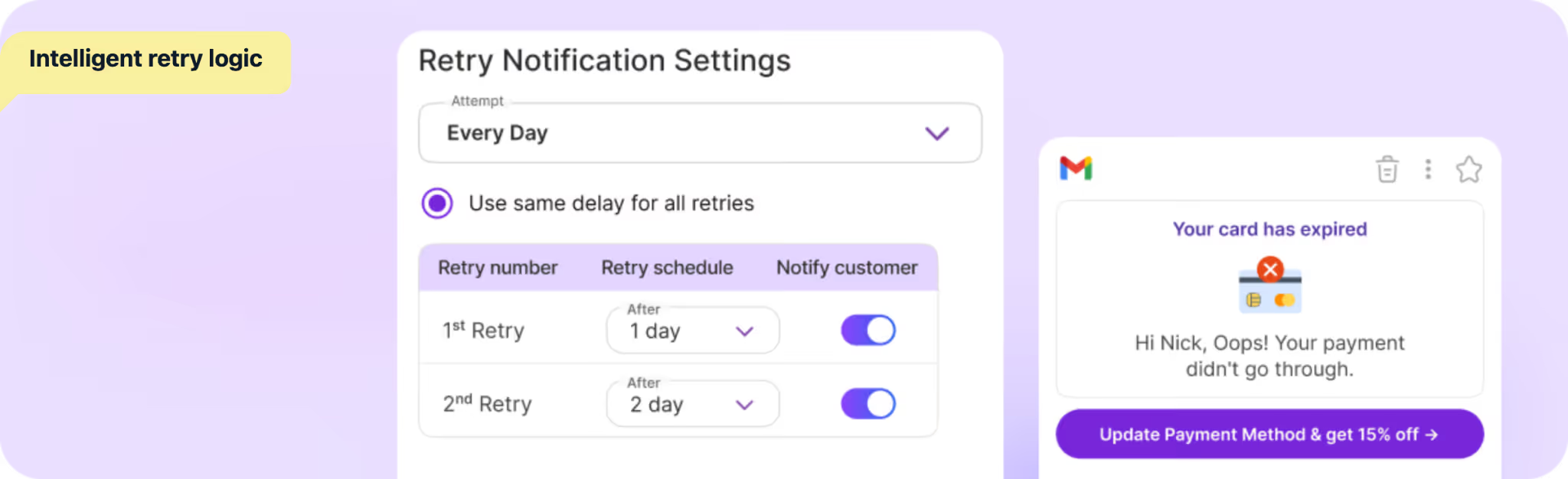
The timing and frequency of payment retries matters enormously. Retrying a declined card at the same time on the same day is unlikely to produce a different result. Loop's smart dunning uses up to 15 intelligent retry attempts, spacing them based on the type of payment failure. A card declined for insufficient funds gets retried around common pay periods. An expired card triggers an immediate customer notification instead of wasting retries.
Backup payment methods
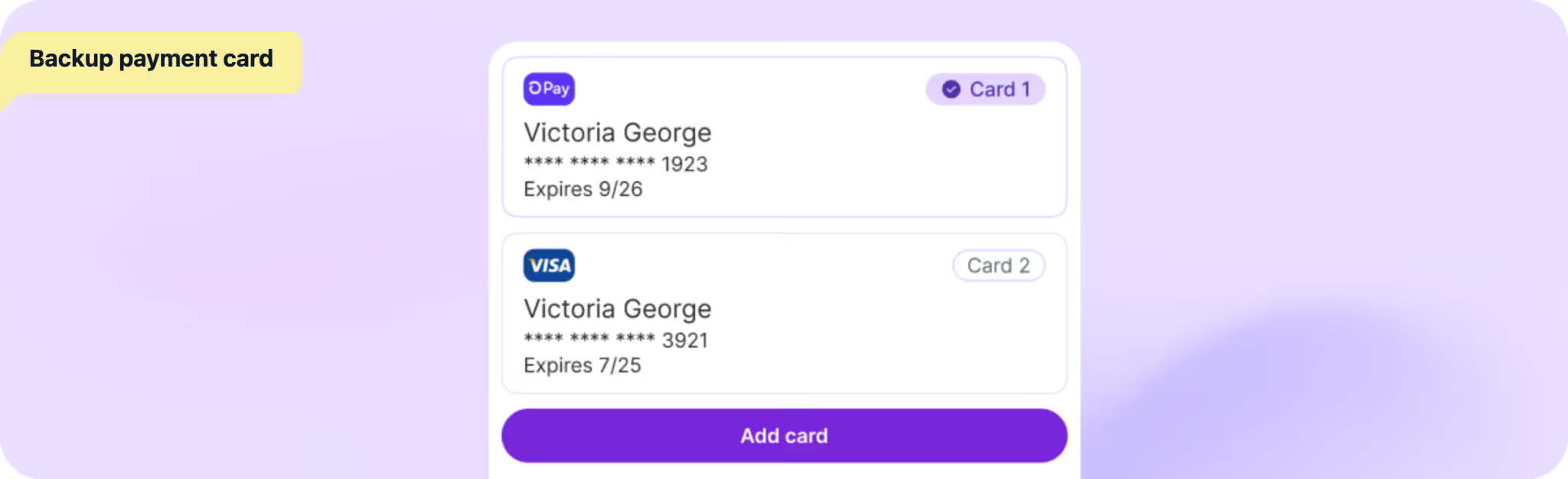
One of the most effective involuntary churn prevention features is the ability to charge a secondary payment method automatically when the primary method fails. If a subscriber has a backup card on file, Loop can charge it without any action required from the subscriber. The subscription continues uninterrupted—the subscriber may never even know a failure occurred.
Quick Action recovery links

When automated retries aren't resolving a failed payment, the next step is getting the subscriber to update their payment method. Quick Actions are magic links embedded in recovery emails and SMS that let subscribers update their payment in one click—no portal login, no password, no friction. The email reads: "Oops! Your payment didn't go through." Below: [Update Payment Method →]—one click, card updated, subscription saved.
Loop integrates with Klaviyo and Attentive to trigger these recovery communications automatically. Brands like Mammaly have seen 30% of subscribers update payment methods via Quick Actions.
Segmented dunning campaigns

Not every failed payment deserves the same urgency or incentive. Loop supports segmented recovery campaigns where messaging and incentives escalate based on retry count and subscriber value. A first-time failure gets a simple "Update your card to continue your subscription" message. After multiple failures, the message shifts to "Update now and get 10% off your next order as thanks for staying." For high-value subscribers with total spend above $500, a premium incentive—"We value you! Update your card and enjoy 15% off"—justifies the deeper discount with the higher lifetime value at stake.
Voluntary churn is harder to fix because the subscriber has made an active decision. But "active decision" doesn't mean "final decision." The data across multiple industry sources is clear: brands with well-designed retention strategies save 20–40% of subscribers who initiate cancellation. The key is intervening at the right moment with the right alternative.
Build a cancellation flow that saves, not just surveys
Your cancellation flow is the most important piece of voluntary churn defense. When a subscriber clicks "Cancel subscription" in their customer portal, they should enter a multi-step journey that does four things: reminds them of the value they're about to lose, collects the real reason they want to leave, presents a personalized alternative based on that reason, and only then—if nothing else works—lets them go gracefully.
Loop's cancellation flows support 20+ segmentation attributes, meaning a first-time subscriber who cancels after one order sees a different flow than a loyal subscriber on their 15th order. This level of personalization is what pushes save rates from the 10–15% baseline to the 30–40% range. For a deeper walkthrough of building these flows step by step, see our guide on how to build a Shopify subscription cancellation flow that saves 20–40% of churning subscribers.
Give subscribers flexibility before they reach the cancel button

The best voluntary churn intervention happens before the subscriber ever clicks "Cancel subscription." Pause, skip, swap, and reschedule features in your customer portal give subscribers alternatives to cancellation—and the data shows these features work. According to Recurly, 25% of subscribers who would have cancelled choose to pause instead when the option exists. Chargebee's research found that 58% of consumers have paused a subscription instead of cancelling in the past year.
In Loop's portal, these are one-tap actions. The subscriber sees their subscription card with clear action buttons: [Skip] [Reschedule] [Swap] [Order Now]. One tap on [Skip], and her next delivery moves out 30 days. No phone calls. No support tickets. Done in 3 seconds. For a complete guide to implementing these features, see our subscription flexibility playbook.
Use gamification to make cancellation feel like quitting early

If you're using Loop Flows to create gamified subscriber journeys—mystery rewards, milestone discounts, free gifts at specific order counts—your cancellation flow should surface this progress prominently.
A subscriber who sees "You're 1 order away from a FREE gift!" on the benefits page isn't just losing a subscription—they're losing progress. They're quitting a game they were about to win. This taps into loss aversion and the endowment effect in a way that straightforward discounts can't match.
Founder videos that humanize the cancellation moment

One of the most effective retention tactics is embedding a founder video message directly in the cancellation flow. Loop supports embedding videos and GIFs into cancellation flow screens. A 30-second video of your founder saying "Hey, I noticed you're thinking about cancelling. I'd love to understand why—and see if there's something we can do" transforms a transactional moment into a human one.
Subscribers expect a form. They expect a discount. They don't expect the founder of the company speaking directly to them. The novelty breaks the pattern and increases engagement with the rest of the flow.
The most effective subscription retention strategies don't treat voluntary and involuntary churn as separate problems. They build an integrated system where each layer reinforces the others. This is the gap in most competitor content—they cover one type or the other. The brands that win at retention fix both simultaneously.
The power of this system is that each layer catches what the previous one misses. Loop Flows keep subscribers engaged so they never consider cancelling. The customer portal gives them flexibility so they don't need to cancel. Cancellation flows save those who do reach the cancel button. Smart dunning recovers those lost to failed payments. And Quick Actions bring back those who slip through every other layer.
Tracking overall churn rate is step one. But to actually improve your numbers, you need granular metrics for each churn type. Loop's analytics dashboard surfaces all of these.
For voluntary churn, track these metrics:
Cancellation save rate—the percentage of subscribers who enter your cancellation flow and don't end up cancelling. Benchmark: 20–40%. Reason distribution—which cancellation reasons dominate, telling you where your product, pricing, or experience needs work. Save rate by reason—which reason-to-offer pairings are working and which need optimization. Retention after save—track 30-day, 60-day, and 90-day retention for saved subscribers; if most cancel again within 30 days, your offers are delaying churn, not preventing it.
For involuntary churn, track these metrics:
Payment failure rate—the percentage of renewal attempts that fail. Recovery rate—the percentage of failed payments successfully recovered through retries and dunning; the industry median sits at 47.6% with smart dunning pushing to 70–80%. Time to recovery—how quickly failed payments are resolved; faster recovery means less risk of subscriber disengagement. Quick Action conversion rate—the percentage of subscribers who receive a payment update link and actually use it.
Here's a practical timeline for diagnosing and addressing both types of churn on your Shopify subscription business.
Week 1: Diagnose
Pull your churn data from Loop's analytics. Calculate your voluntary-to-involuntary ratio. Identify your top three cancellation reasons. Map your payment failure causes. Calculate the revenue impact of each churn type. This diagnostic step is what separates strategic churn reduction from guesswork.
Week 2: Fix involuntary churn first
Configure Loop's smart dunning with optimized retry schedules. Set up backup payment method collection. Build your payment recovery email sequence with Quick Action links. This is the faster ROI play—these subscribers want to stay, and the fix is mechanical rather than persuasive.
Week 3: Build your cancellation flow
Set up your cancellation flow in Loop's admin under Retain > Cancellation Flows. Configure the benefits page with your value proposition. Customize exit survey reasons for your product category. Map each reason to a specific alternative—skip, pause, swap, discount, or product recommendation. Add a founder video if you have one.
Week 4: Enable flexibility and measure everything
Enable skip, pause, swap, and reschedule actions in your customer portal. Set up Loop Flows for gamified reward milestones. Configure proactive outreach for disengaging subscribers via Klaviyo or Attentive. Review all metrics from weeks 2–3 and iterate on your offers based on the data.
Every subscription cancellation that could have been prevented by a payment update, a skip button, a pause option, or a well-timed save offer is revenue you didn't have to lose. The brands that win at subscription retention aren't the ones with the lowest churn—they're the ones who understand exactly why subscribers leave and build systems that address each reason specifically.
Voluntary churn needs human-centered retention: cancellation flows, subscriber flexibility, gamification, and personalized engagement. Involuntary churn needs mechanical precision: intelligent retries, backup payment methods, and frictionless payment recovery. Together, they cover the full spectrum of subscription churn.
Join 1,500+ brands processing $4B+ in subscription revenue with Loop. Book a demo to see how Loop's cancellation flows, dunning management, and retention tools can transform your churn metrics—or start your free trial to start diagnosing and fixing your churn today.
Your churn problem has two halves. Now you can fix both.
Q1. What is the difference between voluntary and involuntary churn?
Voluntary churn happens when subscribers actively choose to cancel—they have too much product, find it too expensive, want a different product, or their needs have changed. Involuntary churn happens when subscribers are lost due to failed payments—expired cards, insufficient funds, or processing errors. The subscriber never intended to leave. Cancellation flows address voluntary churn, while dunning management addresses involuntary churn. Together, they cover the full spectrum of subscription churn.
Q2. How do I know if my Shopify subscription business has a voluntary or involuntary churn problem?
Check your subscription analytics. If more than 30% of your total churn comes from failed payments, you have a significant involuntary churn problem and should prioritize dunning management. If 70%+ is from active cancellations, focus on cancellation flows and subscriber flexibility. Most brands need to address both—the question is which to prioritize first based on revenue impact.
Q3. What percentage of subscription churn is involuntary?
Industry data varies by source and business model. Recurly's benchmarks show involuntary churn at roughly 0.9% monthly (about 26% of total average churn). For ecommerce subscription businesses specifically, involuntary churn from failed payments typically accounts for 20–40% of total churn. This often represents the "easier" churn to fix because the subscriber wants to stay—they just need their payment resolved.
Q4. How does smart dunning reduce involuntary churn?
Smart dunning uses intelligent retry logic to recover failed payments at optimal times rather than fixed intervals. Loop's dunning management supports up to 15 retry attempts with timing optimized by failure type, backup payment methods that charge a secondary card automatically, and Quick Action magic links that let subscribers update their payment method in one click. Industry benchmarks from Slicker show smart dunning systems recovering 70–80% of failed payments, compared to a 47.6% industry median.
Q5. What save rate should I expect from a cancellation flow?
Brands just starting with cancellation flows typically see 10–15% save rates. With personalized reason-based offers—mapping "too much product" to a skip, "need a break" to a pause, "too expensive" to a discount—that rises to 20–30%. Advanced flows with escalating incentives, founder videos, gamification progress, and prepaid conversion options can push save rates to 35–40%.
Q6. Can I use the same tools to fix both voluntary and involuntary churn?
Yes—but with different features. Loop Subscriptions provides a unified platform that addresses both: cancellation flowsand subscriber flexibility for voluntary churn, and smart dunning with Quick Actions for involuntary churn. The advantage of using one platform is that your analytics, subscriber data, and retention workflows are all connected—giving you the full picture to optimize holistically.
Q7. Should I fix voluntary or involuntary churn first?
Start with involuntary churn. It's the faster ROI play because these subscribers already want to stay—you just need to fix the payment issue. Smart dunning, backup payment methods, and Quick Action recovery links can be configured in a week and start recovering revenue immediately. Then layer on voluntary churn defenses: cancellation flows, flexibility features, and gamification. This phased approach maximizes impact while spreading the implementation effort.