.avif)

She subscribed three months ago. Protein powder, delivered monthly. She loves the product, never skips an order, and has even told friends about your brand.
Last week, she logged into her customer portal looking to add creatine to her next order. But all she found was an option to buy more protein powder at a bulk discount, or swap to a different flavor of the same product.
She closed the tab. Later that night, she bought creatine from a competitor's site.
You lost that sale—not because she didn't trust you, but because your portal never showed her what else you sell."
This happens every day. Subscribers who'd happily spend more, buying from someone else because their subscription portal treats upselling as "more of the same" instead of expanding the relationship.
Here's the math that should change how you think about this: existing customers are 60-70% more likely to buy than new prospects.
The opportunity isn't acquiring more subscribers. It's capturing the revenue your current subscribers are ready to spend—if you'd only show them the right product at the right time.
Most subscription apps treat upselling as an afterthought. They manage recurring orders, handle billing, and give subscribers a portal to skip, pause, or cancel. That's it. But subscription customers don't live at checkout. They live in their customer portal—checking delivery dates, updating payment methods, maybe considering whether to skip next month. That's where the upsell opportunity is. And if your subscription app doesn't have upselling built into the portal, you're missing it entirely.
A subscription app without upselling can't show personalized product recommendations based on what's already in someone's subscription. It can't let subscribers add a one-time product or a new subscription item to their next order. It can't surface upgrade paths—like moving from a standard pack to a premium pack—at the right moment based on order history or LTV. It can't use banners to promote new products or limited-time offers the moment a subscriber logs in.
Loop's upsell engine was built specifically for this moment—when a subscriber is already engaged, already trusts you, and is one tap away from spending more. Personalized recommendations, one-time or subscription add-ons, upgrade prompts, targeted banners, segment-based offers—all inside the portal where subscribers are already taking action.
For brands using Loop, portal upsells contribute to approximately 20% of subscription revenue. That's not a rounding error. That's a growth channel.
Generic recommendations don't convert. "You might also like" sections filled with random products get ignored.
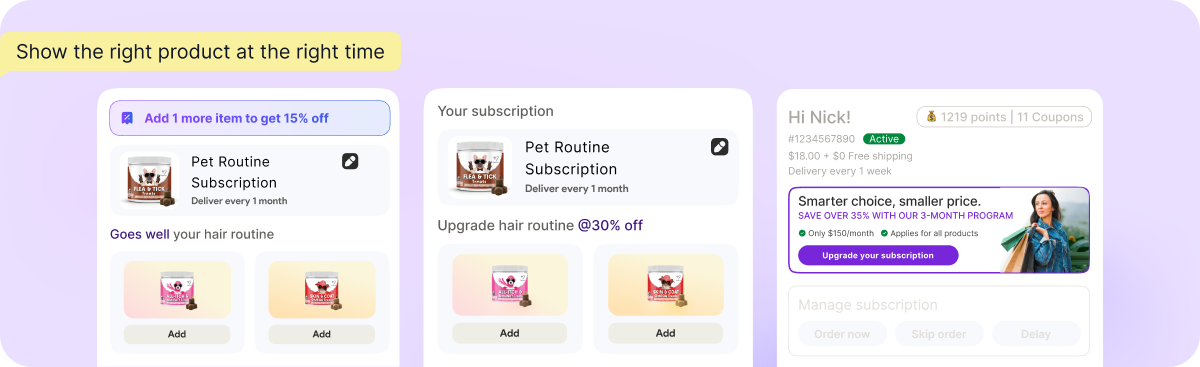
What works: complementary product recommendations based on what a subscriber already buys. A creatine offer to someone who subscribes to protein powder. A refill bundle to someone who bought the starter kit. Early access to a new flavor for VIP customers who've spent $500+.
Build upsell profiles with preset conditions that let you offer personalized upsells across every touchpoint—portal, email, SMS, and more:
Products: If subscription contains [Daily Moisturizer], show [Vitamin C Serum, Eye Cream, SPF 50]
Customer: If customer tag = "VIP", show [Limited Edition Holiday Set - Early Access]
Subscriptions: If order count ≥ 5, show [Loyalty Bundle with 15% off]
Bundles: If subscription includes [Puppy Starter Kit], show [Monthly Refill Bundle]
Demographics: If shipping country = "Canada", show [Canada-exclusive maple collection]
Integrations: Redeem loyalty points and add one-time products directly from the upsell section
Discount codes: If discount code "BFCM" is applied, show [Holiday Bundle, Limited Edition Gift Set]
You also control how products are selected for each profile. Hand-pick specific items for strategic promotions. Let best-sellers surface automatically. Or use smart recommendations based on subscription contents and purchase history.
OSEA Malibu set up personalized portal upsells with messaging like "Goes well with your next order." One upsell profile hit a 4.36% conversion rate. Their upsell revenue contribution grew from 4.5% to 6.8%—while churn dropped from 10% to 5%.
The targeting made the difference. Relevant offers convert. Generic ones don't.
Here's where subscription upselling gets interesting.
A subscriber sees a product recommendation. They want it. But do they want it once, or every month?

Most upsell tools force the decision for them—usually one-time only. Loop gives subscribers the choice:
━━━━━━━━━━━━━━━━━━━━━━━━━━━━━━━━━━━
Lavender Body Oil - 8oz
"Completes your skincare routine."
~~$34.00~~ $28.90
○ One-Time Purchase $28.90
● Subscribe & Save 15% $24.65/delivery
[Add to Next Order →]
━━━━━━━━━━━━━━━━━━━━━━━━━━━━━━━━━━━
One-time additions ship with their next delivery. No separate transaction, no extra shipping cost. Perfect for trying something new.
Subscription cross-sells lock in recurring revenue. A coffee subscriber adds Oat Milk as a subscription—now they have two products shipping together, consolidated into one order, and you've increased both AOV and LTV.
One tap either way. The subscriber gets flexibility. You get revenue.
Adding products isn't the only path to higher AOV. Sometimes subscribers don't need more—they need better.
Loop's upgrade profiles give you three ways to increase order value from existing subscriptions:
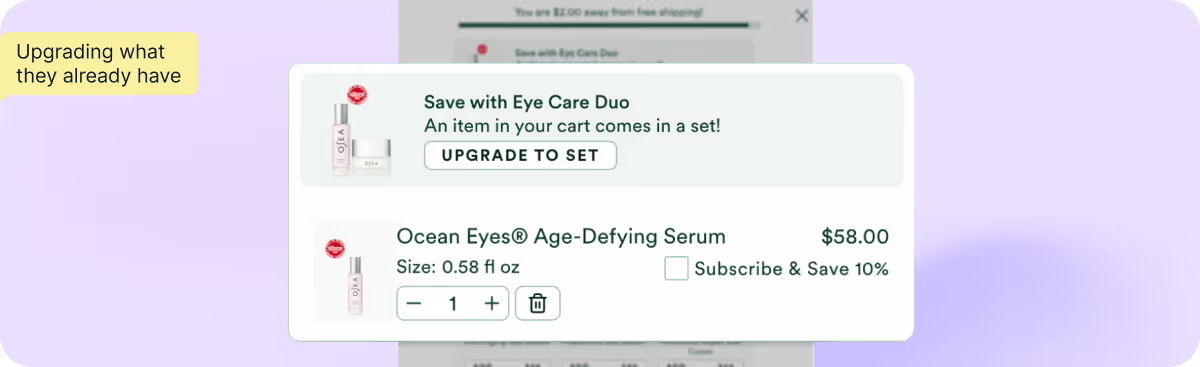
SKU upgrade: Standard pack → Premium pack. A subscriber on Basic Protein sees: "Upgrade to Performance Protein—same price per serving, better results." One click, done.
SKU + frequency upgrade: Combine a product upgrade with a delivery cadence that makes sense. Standard monthly → Premium every 2 months. Higher-value product, optimized for usage.
Quantity upgrade with volume discount: 1 pack/month → 3 packs/3 months. Frequency adjusts intuitively as quantity changes. Subscribers save per unit, you lock in larger orders.
When a subscriber clicks an upgrade banner, a drawer slides open with the details—what changes, what they'll pay, what they'll save. Two options: [Confirm Upgrade] or [Show Me Other Options].
No friction. No confusion. Just a clear path to higher AOV.
The swap feature isn't just for preventing cancellations—it's an upsell lever hiding in plain sight.

A subscriber on your Standard Coffee blend can swap to Premium Single Origin with one click. Old product out, upgraded product in. No cancellation, no re-signup, no lost subscriber.
This works both directions:
When someone's getting bored and considering cancellation, offer a swap to something new. Keep them in the ecosystem instead of losing them entirely.
When someone's engaged and browsing their portal, surface premium alternatives. "Try our new Reserve Roast—same delivery schedule, elevated experience."
Either way, the swap happens instantly. Subscriber stays active. And more often than not, they've just moved to a higher-value product.
Every time a subscriber logs in to check their next delivery date, they're showing intent. They're engaged. They're thinking about your brand.

Loop's personalized upsell banners meet them in that moment:
🛒 Add up to 2 items @ 50% off [Shop Now]
🎁 VIP Early Access: New Vanilla Bean flavor [Add to Next Order]
⚡ Upgrade to the 3-pack and save 25% [See Upgrade Details]
Click an upgrade banner, and a slide-in drawer opens with full details. Subscribers see exactly what changes—product, quantity, frequency, new price—and confirm with one click. Or they browse other options if the first offer doesn't fit.
The banners use the same targeting conditions as upsell profiles. VIP customers see exclusive access. BFCM shoppers see promotional bundles. Loyal subscribers see rewards. New subscribers see starter offers.
Mammaly built a custom portal with "Product of the Month" highlights. Early access to new products worked as both retention and upsell—subscribers stayed engaged, AOV increased, and shipping costs dropped through order consolidation.
Not all subscribers should see the same offers. Your VIP customers—the ones who've spent $500+, who've been subscribed for a year, who've never skipped an order—deserve something better.

A new flavor launches? They get early access before general release. A limited-edition bundle drops? It's only visible to them. The goal: make them feel valued, give them deeper discounts, and watch them spend more.
OSEA Malibu targeted high-LTV customers with exclusive offers and custom messaging. Subscribers felt "truly valued" rather than like just another transaction.
For newer customers with lower LTV? Start small. Trial sizes, sample packs, lower-priced accessories. Build the habit of adding to orders before pushing premium upsells. As order count grows, profiles automatically shift to higher-value offers.
Running a Black Friday campaign? Set a condition: if discount code "BFCM" is applied, a specific list of promotional items becomes visible for upselling.
Subscribers using your promo code see exclusive bundles and limited-time offers. Everyone else sees the standard upsell section.
When the promotion ends, the visibility rules handle the transition. No manual switching, no forgetting to turn things off, no "why is this still showing?" three weeks later.
The same logic works for any campaign—holiday launches, seasonal products, inventory clearance, loyalty rewards. Set the conditions once, let them run.
Bundles multiply everything. Bundled products turn over 30% faster than individual items. For subscription brands, bundles compound the AOV gains from everything above.

Someone with a single protein subscription sees:
"Upgrade to the Performance Bundle—protein + creatine + shaker. Save $12 per shipment."
That's an upsell (adding creatine), a cross-sell (adding shaker), and a volume discount (bundled pricing)—all in one offer.
You can create preset bundles for your support team to add, build-your-own boxes where customers customize, or subscriber-exclusive bundles unavailable to one-time purchasers.
The upsell profile conditions apply here too. Starter bundles for new subscribers, premium bundles for VIPs, seasonal bundles for holiday shoppers.
Showing upsells is the easy part. Knowing which ones actually drive revenue—that's where most apps go silent.
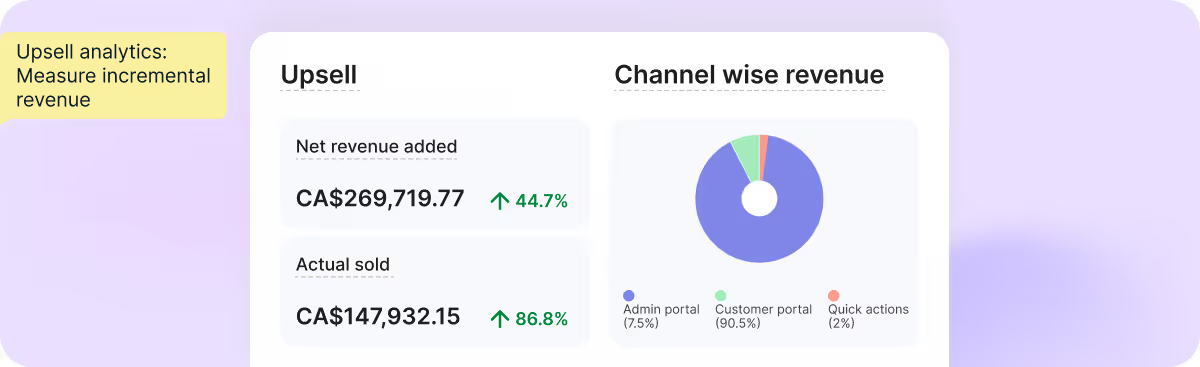
Loop's upsell analytics show you both sides:
Profile performance: Each upsell profile gets its own dashboard. Views, conversion rate, units sold, revenue realized. You see which targeting conditions are working and which need adjustment. Channel breakdown included—customer portal revenue vs. admin portal revenue, tracked separately.
Product performance: Drill into individual items. Which products are subscribers choosing as one-time vs. subscription? How many units sold? How much revenue per product?
You also see the difference between "added upsells" (products added to upcoming orders) and "sold upsells" (products that actually shipped). No vanity metrics—just bottom-line impact.
NutriPaw used these analytics to identify their highest-performing upsell profiles. Combined with optimized subscription flows, they grew subscription revenue 73.5% in 9 months—and 40% of canceled subscribers came back through targeted win-back campaigns.
Remember her? The protein subscriber who bought creatine from a competitor because you never offered it?
With Loop, her portal experience looks different. She logs in to check her next delivery date, and sees:
Creatine Monohydrate—"Pairs perfectly with your protein. Subscribers on their 5th+ order get 15% off."
She taps [Add to Next Order →], chooses the subscription option to save 20%, and it's done. Ships with her protein next week.
You didn't just capture that sale. You added a second subscription. Her AOV went up. Her LTV went up. And she never even considered going somewhere else.
That's what happens when your upsell engine is built for subscriptions.
Your subscribers already trust you. They've already committed. The question is whether you're giving them reasons to spend more—or watching that revenue walk to competitors.
Loop's upsell engine is built for subscription brands who want to maximize AOV from customers who've already converted.
Join 1,065+ brands processing $2B+ in subscription revenue with Loop.
Book a demo to see how it works—or start your free trial and build your first upsell profile today.
Your subscribers are ready to spend more. Give them the opportunity.