.avif)

You didn't lose them to a competitor. They didn't find a better price. They loved your product enough to subscribe.
Then their credit card expired, and they vanished.
This is involuntary churn—subscribers forced out by payment failures, not by choice. It accounts for 20-40% of all subscription churn and costs the industry $440 billion annually. That's more than 10x what businesses lose to fraud.
Here's the math that should concern you: the average subscription business loses 10% of annual recurring revenue to failed payments. For a brand doing $1M in subscription revenue, that's $100,000 walking out the door—from customers who never wanted to leave.
The opportunity? 60-70% of failed payments are recoverable with the right approach.
Most dunning apps for Shopify offer basic retry logic and generic "update your payment" emails. Loop's dunning engine was built differently—to recover revenue that other platforms leave on the table.
Not all payment failures are created equal—and you'll know the difference on the first attempt itself.
Soft declines are temporary—insufficient funds at that moment, brief bank holds, network hiccups. The system queries the bank and identifies these as recoverable. These can succeed on retry if you time it right.
Hard declines are permanent—stolen cards, closed accounts, card expiry flagged by the issuer. No amount of retrying will recover these. You need new payment information.
The most common reason for decline? Insufficient funds, accounting for 44% of all declines. Expired cards represent another 10-12%—a number that spikes with subscriptions where card details sit on file for months.
Basic dunning tools treat all failures the same: fixed retry schedule, generic email, eventual cancellation. That's not a recovery strategy. That's hoping for the .
The difference between basic and intelligent recovery? Brands using sophisticated dunning systems recover 15-20% more failed payments than those using default tools.
Here's what makes Loop the Shopify subscription app for failed payment recovery—and why brands like Mammaly and Lumin are seeing results basic dunning can't deliver.
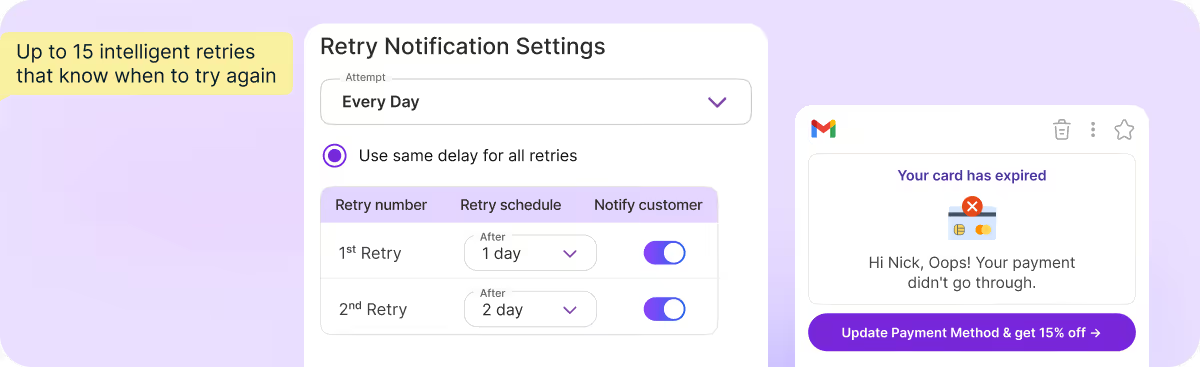
Most Shopify subscription apps give you 3-5 retry attempts. Loop Subscriptions gives you up to 15.
Why it matters: high-ticket subscriptions often fail for temporary reasons—a credit limit that refreshes at month-end, funds that deposit on payday, fraud detection that clears after the first decline. Limited retries exhaust your attempts before the obstacle clears.
But it's not just about quantity. Loop's algorithm determines optimal retry timing based on the specific failure type. A temporary insufficient funds error gets different handling than an expired card.
Lumin Skincare implemented Loop's smart retry logic and saw analytics reveal optimal timing windows. The result: a 12.6% revenue boost through enhanced payment recovery in just 3 months.
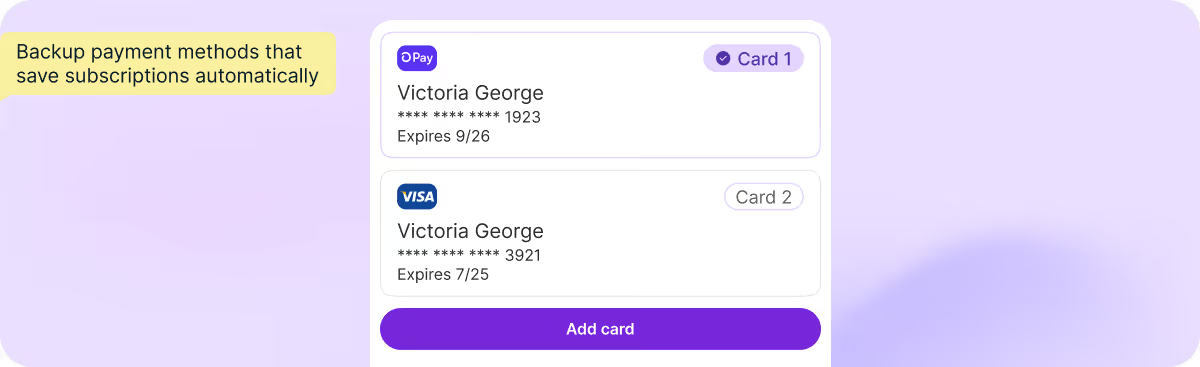
When a primary card fails, Loop can automatically charge a secondary card on file.
No email needed. No customer action required. The subscription stays [ACTIVE].
Here's the key insight: if a backup payment method is on file and works, the dunning sequence never even starts. The subscriber never receives a single "payment failed" notification. They experience zero friction.
Think about what this solves: a subscriber's primary card expires, but they haven't updated it yet. In most apps, this triggers a dunning sequence—emails, SMS nudges, and eventually a cancelled subscription if they don't respond.
With backup payment methods, Loop simply charges the secondary card. Revenue flows. Everyone wins.
This is why proactively incentivizing subscribers to add a backup payment method pays dividends. A simple prompt in the customer portal—"Add a backup card and never miss a shipment"—can prevent payment failures from becoming churn events.
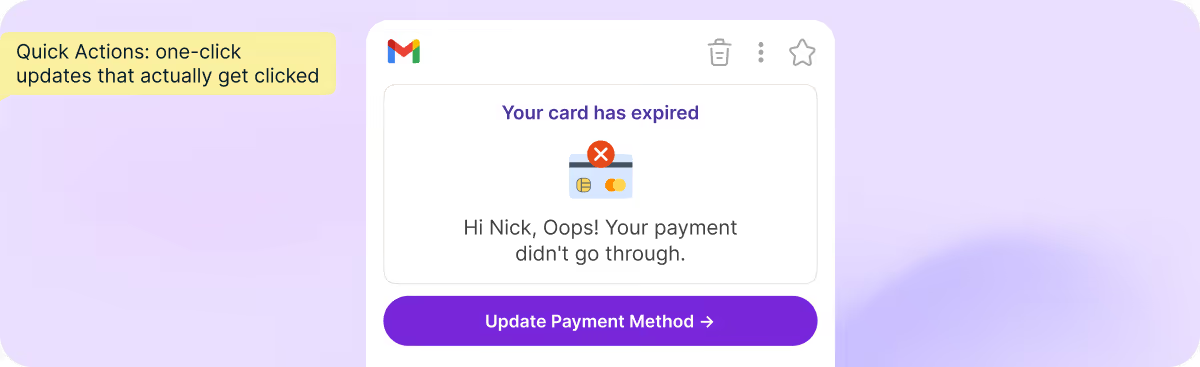
When automated recovery exhausts its options, you need humans to act. This is where most failed payment recovery solutions fall apart.
The competitor experience: Customer receives a Shopify email to update payment details. They click through to a login page, enter credentials, navigate to account settings, find the payment section, and finally enter new card details. Multiple steps, multiple drop-offs.
The Loop experience: Subscriber gets an email: "Oops! Your payment didn't go through." Below it: [Update Payment Method →]. One click opens a drawer directly in your branded customer portal—built on top of Shopify but seamlessly integrated. Card updated. Subscription saved. Done.
No redirects. No login hunting. No navigating through Shopify's interface.
Mammaly saw 30% of their subscribers update payment methods via Quick Actions—and achieved an 18% reactivation rate through the streamlined experience.
Segmented Quick Actions add intelligence. You can create multiple segments within a single Quick Action with different incentives:
You're not over-discounting easy wins or under-incentivizing critical saves.
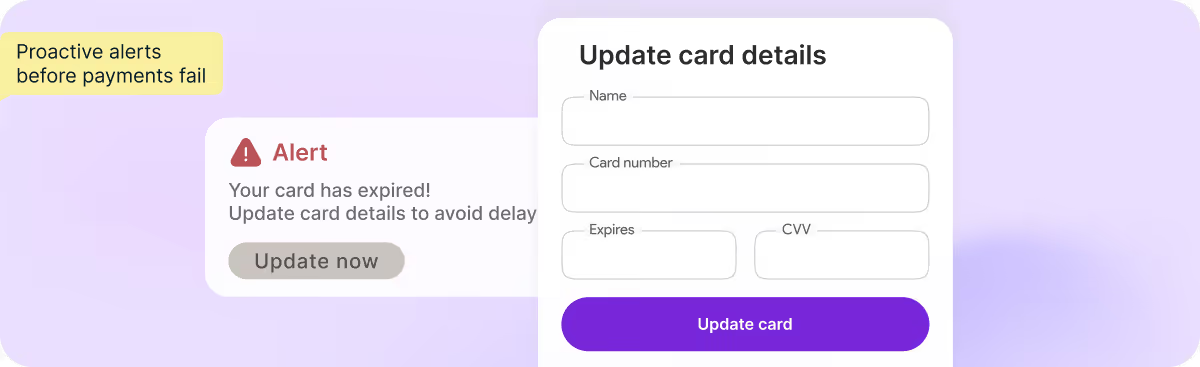
The recovery is prevention.
Loop integrates with Klaviyo, Attentive, and other platforms to trigger personalized flows based on payment events—including cards approaching expiration.
A subscriber who updates their card before it expires never enters the recovery funnel. They never receive a "payment failed" email. They never question whether they still need this subscription.
Loop also sends recovery communications only during local daytime hours while retries continue silently in the background. An email at 3 AM gets buried. An SMS at midnight annoys. Timezone awareness ensures messages arrive when they'll actually be seen.
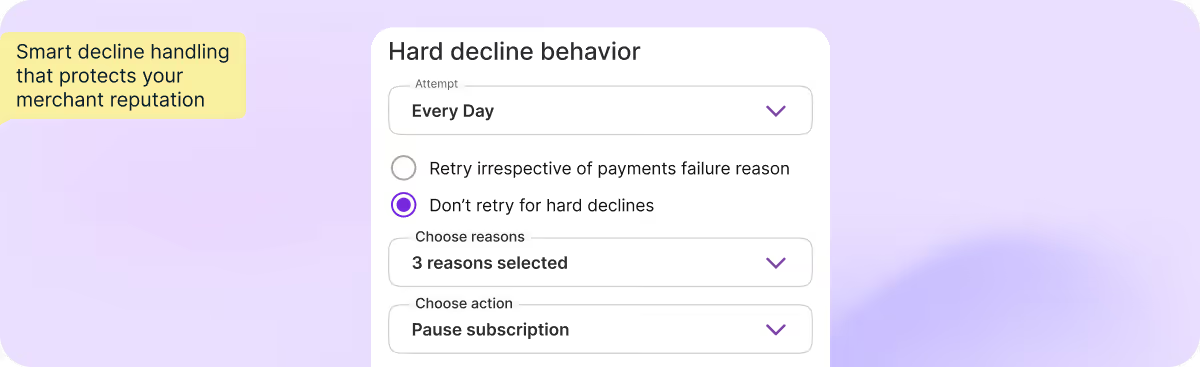
Here's something most brands miss: every failed payment attempt affects your merchant reputation.
Payment processors use your Merchant ID to assess transaction trustworthiness. More failed payments = lower MID score = higher decline rates on future transactions—even for new subscribers trying to sign up.
Loop automatically identifies hard declines and skips retries for those subscriptions. This saves transaction fees and protects your MID score by not repeatedly attempting charges that will never succeed.
Loop also surfaces high-risk subscriptions—cards approaching expiration, repeated soft declines, patterns that predict failure—so your team can reach out proactively before the next billing cycle.

What happens when all retries are exhausted matters. Not every failed payment should result in immediate cancellation.
Loop lets you choose the action that makes sense for your business:
This flexibility means you can match your dunning outcome to your brand philosophy and customer expectations.
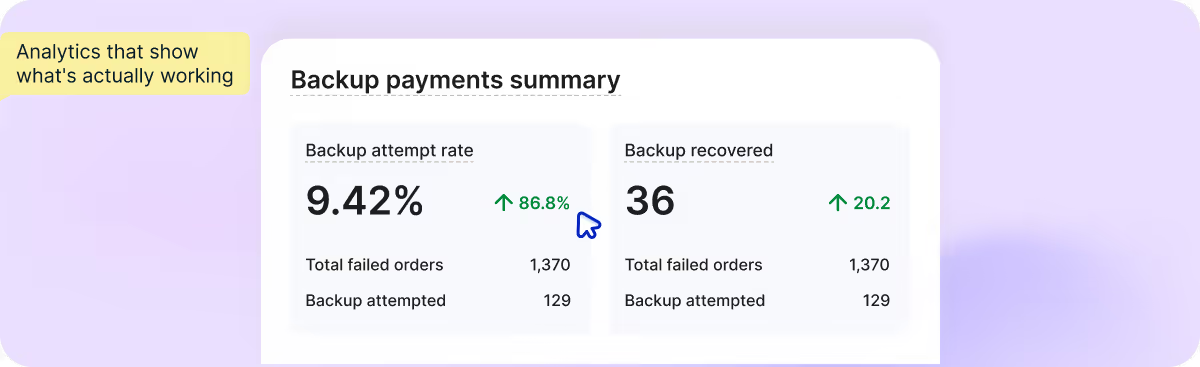
Recovery rate alone doesn't tell you enough. You need to understand why payments fail and which tactics work.
Loop's analytics dashboard tracks:
Data-driven decisions beat gut feelings. Loop gives you the information to continuously optimize your recovery strategy based on your specific subscriber behavior.
Having the right tools is half the battle. Here's how to configure them for optimal results.
Every retry notification creates friction. A subscriber who receives "Payment failed!" on day one, day two, and day three gets annoyed—and may cancel out of frustration rather than update their card.
Best practice: Run initial retries silently. Only notify subscribers toward the end of your retry sequence when their action is actually needed. Let the system do its work in the background first.
Your retry frequency should match the likelihood of success.
First 3-5 retries: Dense spacing (1 day apart). Temporary issues like insufficient funds often resolve within days.
Subsequent retries: Spread out. Give time for payday cycles, statement periods, and life to happen.
Total span: At minimum, spread your retry attempts across one full billing cycle. A monthly subscriber's payment might fail on the 1st but succeed on the 15th when their paycheck hits.
Don't offer your biggest discount on the first failed payment notification.
Initial phase: Friendly reminder—"Update your card to continue your subscription." No discount needed. Many subscribers will update simply because they're asked.
Middle phase: Small incentive—"Update now & get 10% off your next order as thanks for staying."
Final attempt: Heavier discount or free gift. This is your last chance—make it count.
This approach preserves margin on easy recoveries while still saving subscribers who need extra motivation.
The dunning sequence is the one that never starts.
Proactively encourage subscribers to add backup payment methods through your customer portal. If the primary card fails and backup succeeds, the subscriber experiences zero friction—no emails, no notifications, no "payment failed" anxiety.
Incentivize backup card additions: "Add a backup payment method and get free shipping on your next order."
Send payment recovery communications during local daytime hours only. A 3 AM email gets buried under the morning inbox. A midnight SMS annoys.
Loop handles this automatically—retries continue silently around the clock, but customer-facing communications respect local time.
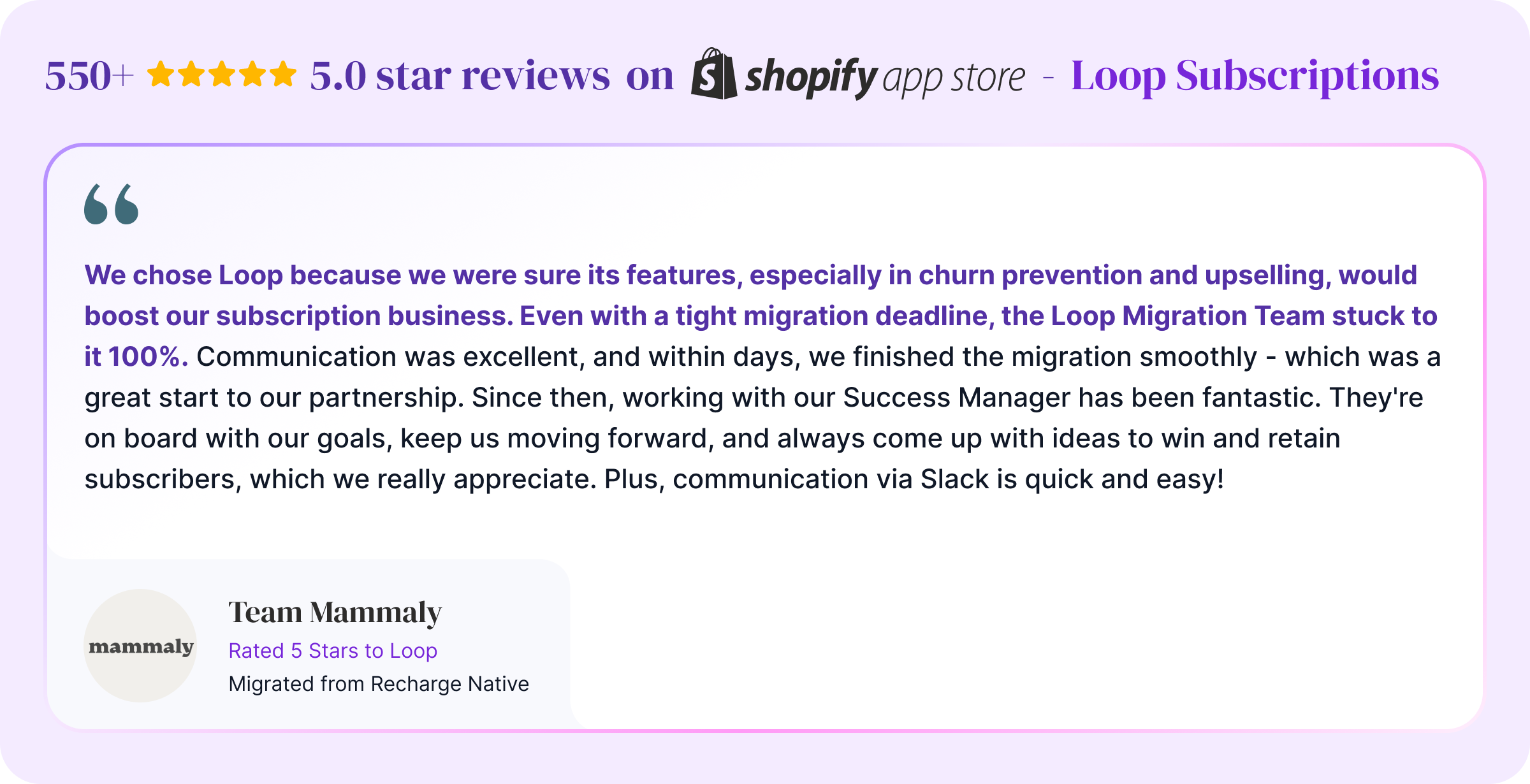
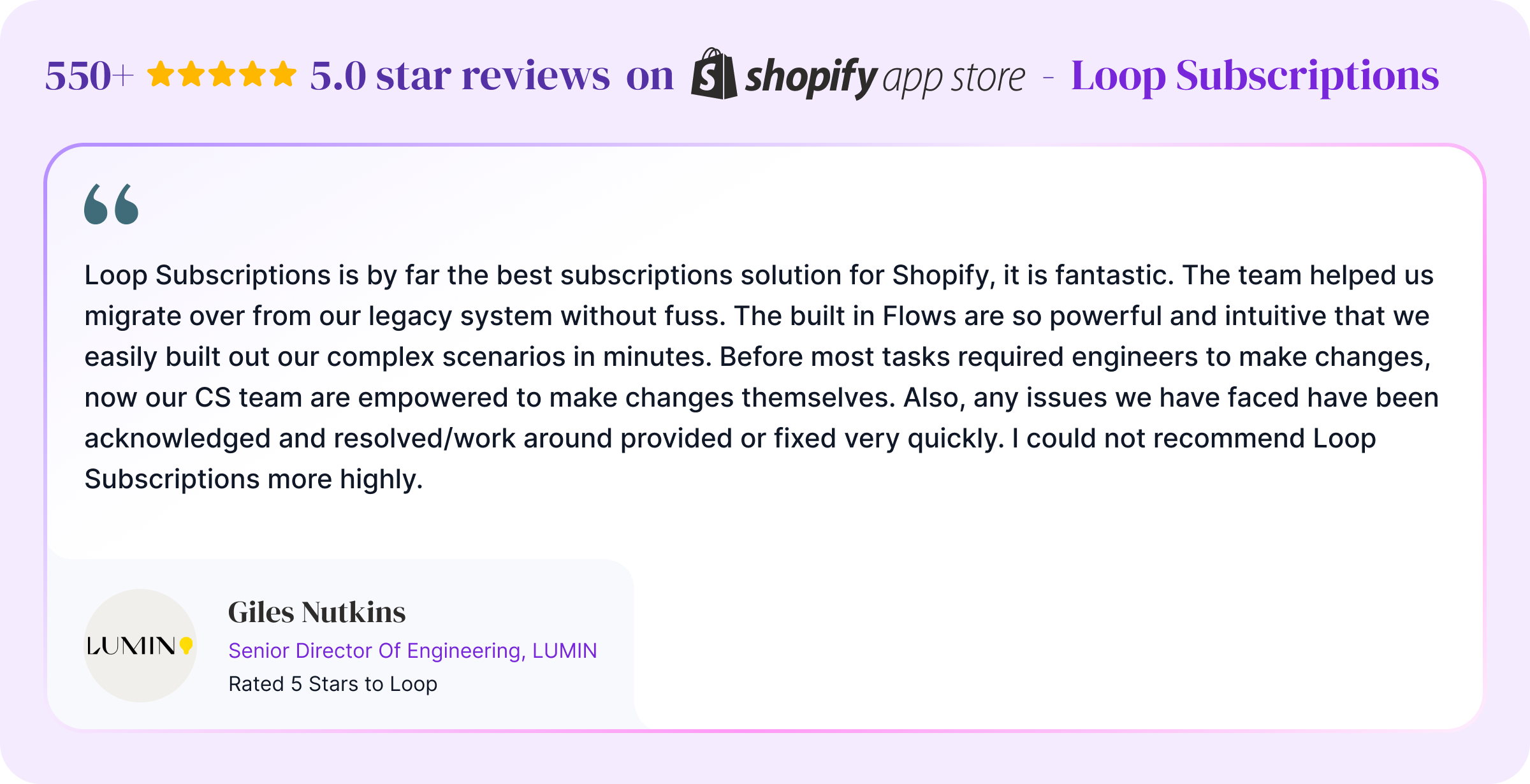
Across Loop merchants: Smart dunning and churn prevention tools recover 15-20% more failed payments compared to basic solutions.
Failed payment recovery is reactive. The most successful subscription businesses also play offense.

Loop Flows build subscriber engagement that makes people more responsive to recovery outreach. Imagine a subscriber sees a banner in their portal: “You're 1 order away from a FREE gift!" That subscriber is far more likely to update their payment method than one who's been passively receiving shipments.
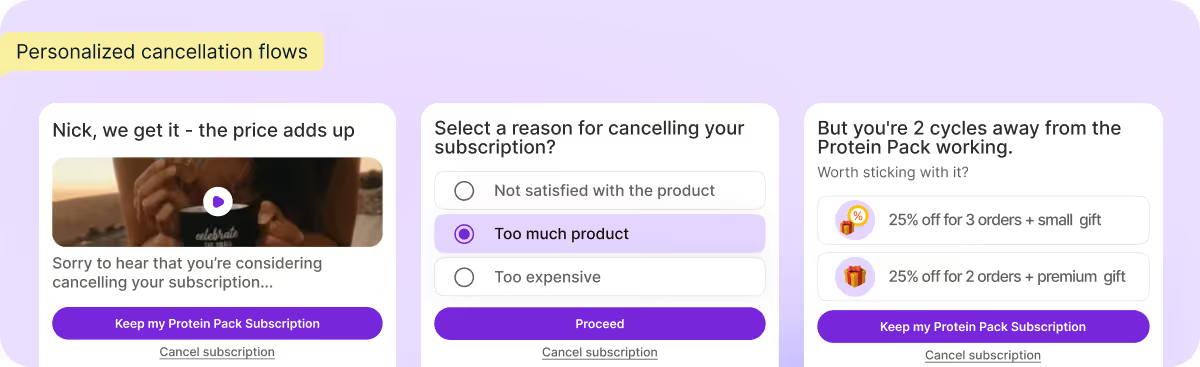
Cancellation flows with prepaid conversion options can move monthly subscribers to prepaid plans. Prepaid subscribers have dramatically lower involuntary churn because the payment has already been processed—there's no card to decline.
Loop wasn't designed as a dunning tool with subscription features bolted on. It's a retention platform where payment recovery is one component of a broader strategy to keep subscribers engaged, paying, and loyal.
Involuntary churn doesn't have to be a cost of doing business. With the right infrastructure, failed payments become recoverable revenue.
Join 1,100+ brands processing $4B+ in subscription revenue with Loop.
Book a demo to see how Loop's failed payment recovery can transform your churn metrics—or start your free trial to experience it firsthand.
Your subscribers want to stay. Give them every chance to do so.