Learn how to set up post-purchase subscription upsells in Shopify to convert one-time buyers into recurring customers. This guide covers different types of upsells (checkout, email/SMS, pop-up, and follow-up sequences), selecting the right upsell app, creating compelling offers, and integrating them seamlessly into the post-checkout flow. You’ll also learn how to track and optimize conversions, increase AOV and LTV, and avoid common mistakes, all while using real-world examples from successful brands to drive long-term retention and growth.
1. Different Types of Post‑Purchase Upsells
Post‑purchase upsells can take many forms and be integrated across various customer touchpoints. Below is a breakdown of the different types of post‑purchase upsell strategies you can leverage to boost your AOV and grow your subscription base:
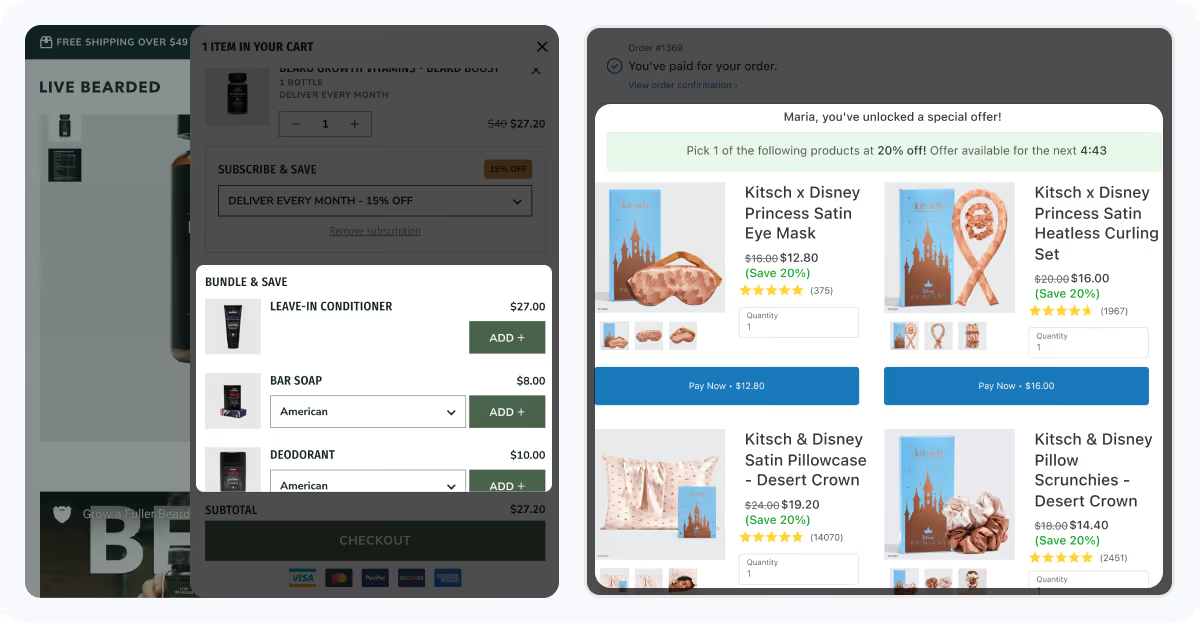
Checkout Upsells
What they are: Upsell offers presented immediately after checkout, typically on the Thank You page or Order Confirmation modal.
Why they work: This is a high‑intent moment—customers have already committed to purchasing and their payment information is captured. Offering them a subscription upgrade or add-on here reduces friction and maximizes conversion potential.
Email/SMS Campaign Upsells
What they are: Follow-up emails or SMS messages sent after the initial purchase, offering a subscription upgrade, add-on, or exclusive deal. These are often used for limited-time promotions or re-engagement campaigns.
Why they work: The customer has already made a purchase, indicating interest in your product. A well-timed follow-up upsell capitalizes on that interest, and with SMS open rates up to 98%, it's a highly effective channel for driving engagement.
Pop-Up or Modal Upsells
What they are: Upsell offers shown as a pop-up or modal window after the customer has completed checkout.
Why they work: These pop-ups create an immediate, interactive experience, providing an opportunity to offer additional products or subscription services right after the initial purchase, while the customer is still engaged.
Post‑Purchase Follow-Up Sequences
What they are: Automated email or SMS sequences that follow up with customers post-purchase, offering them an incentive or upgrade to a subscription.
Why they work: These sequences nurture the customer relationship and introduce the recurring value of a subscription after the customer has had time to experience the product. They also allow for more personalized upsells based on what the customer originally purchased.
2. How to Set Up Post‑Purchase Subscription Upsells in Shopify?
Step 1: Choose the Right Upsell App & Flow
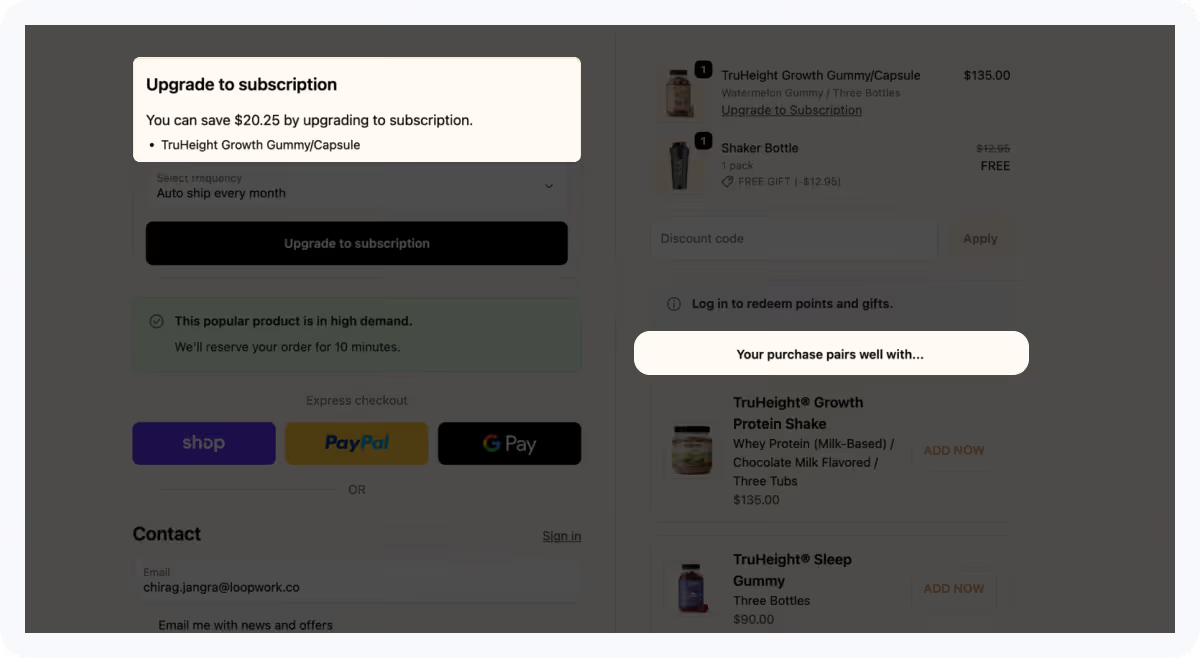
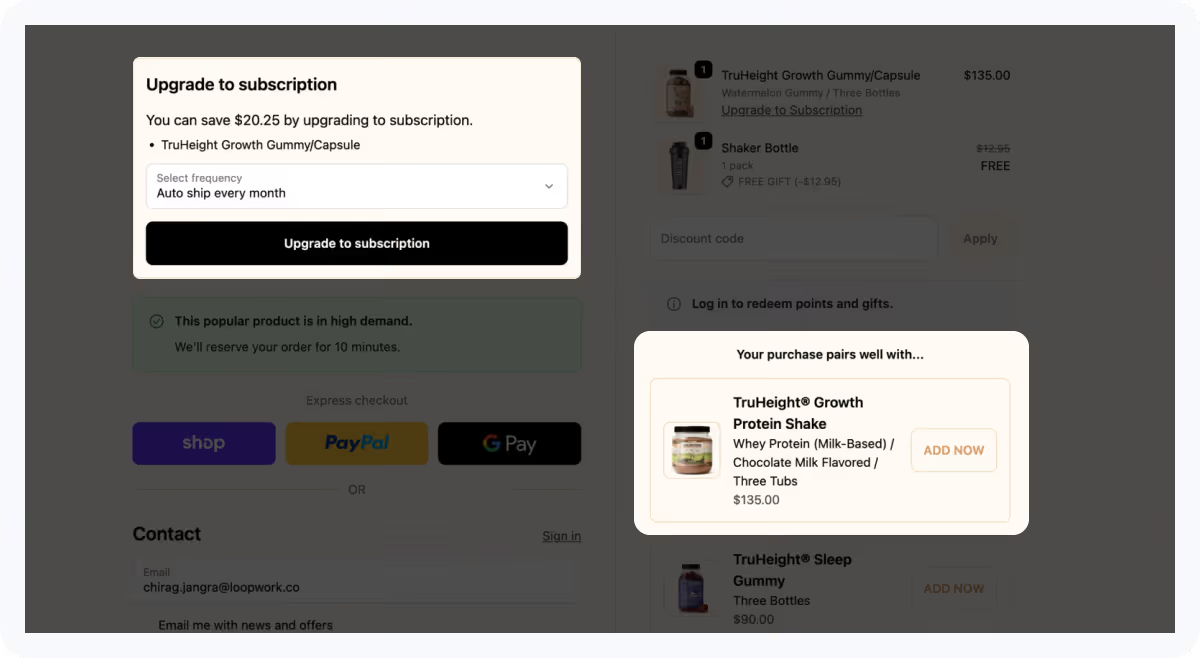
Use a subscription-capable app like Loop Subscriptions that supports post-purchase upsell flows. Loop Subscriptions supports upselling & cross-selling, flexible subscription tiers, smart cancellation flows, and more.
Make sure the app allows you to display the upsell after checkout (e.g., on the thank-you page, order confirmation modal, or within a follow-up email sequence) rather than only pre-checkout.
When planning the integration in Shopify, ensure that your payment method, SKU, and subscription plan are all properly configured for upsells.
Step 2: Create Your Offer
Decide what you're upselling. Some examples:
Upgrade from one-time purchase → monthly subscription
Add premium-tier subscription with bonus product
Extend subscription duration (12 months) for a discount
Define clear benefit messaging: Why should the customer subscribe? Examples:
"Save 15% every month"
"Get exclusive member gifts"
"Skip the reorder hassle"
Offer an incentive: Use a limited-time discount, bonus product, or loyalty perk to increase urgency.
Segment properly: Show the upsell offer only to one-time buyers (not existing subscribers) and tailor it based on what they purchased.
Step 3: Design & Integrate the Upsell Experience
Choose placement: Post-checkout thank-you page, order confirmation screen, or first-order follow-up email.
Keep the flow simple: Use a clear call-to-action (CTA), such as "Switch to subscription" or "Upgrade now". One-click or minimal friction is ideal.
Maintain brand consistency: The visual design should align with the rest of your store.
Configure the subscription plan in Loop Subscriptions: Set billing frequency, terms, discount, and trial (if applicable).
Customer portal integration: If using a customer portal, ensure that the upsell is reflected there for transparency.
Step 4: Track, Optimize & Retention-Proof the Flow
Measure key metrics: Track the upsell conversion rate (percentage of one-time buyers who convert), incremental revenue, and changes in retention (do upsold customers stay longer?).
A/B test: Test different offer variants (discount vs. bonus product), placements (modal vs. email), copy, and timing (immediate vs. delayed).
Monitor retention: Post-purchase subscription upsells should drive long-term value, not just initial conversion.
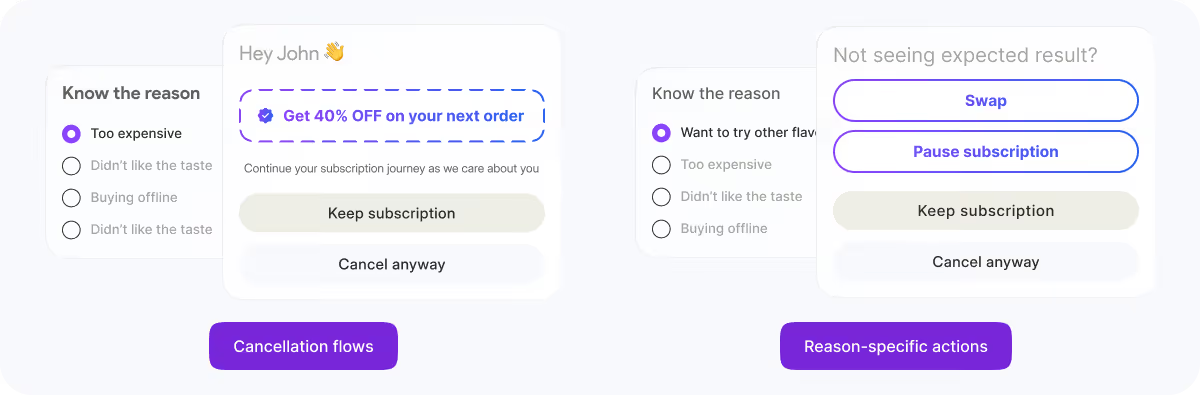
Use retention tools: Leverage cancellation flows, skip/pause options, and subscription management features to protect retention.
Optimize for churn: If upsold subscribers are churning quickly, revisit the offer quality, delivery experience, and customer expectations.
3. Real-World Results: How Post-Purchase Upsells Drive AOV Growth
Post-purchase upsells have proven to be one of the most effective ways for Shopify brands to increase Average Order Value (AOV) and generate additional revenue without incurring extra customer acquisition costs. Below are a few real-world examples showcasing how this strategy works:
Challenge: Shishir Nigam, a seasoned e-commerce entrepreneur, was seeking to boost his store’s AOV. His previous cross-sell and upsell efforts through in-cart offers were not yielding strong results.
Solution: Shishir turned to OneClickUpsell (Zipify OCU) to implement a post-purchase upsell funnel, featuring three upsells and two downsells. The upsells appeared after checkout, capitalizing on the customer’s high intent to buy.
Results:
Views: 9,154
Conversion rate: 19.61%
Additional revenue: US$58,481
This strategy helped Shishir nearly double his AOV from around US$25 to nearly US$50, generating an incremental revenue of US$97,700 in total—without any added acquisition cost.
Key Takeaway: A well-designed post-purchase upsell funnel, with strategically placed offers, can significantly boost both AOV and revenue without relying on new customer acquisition.
Brand Overview: Ava Estell is a London-based all-natural skincare brand, specializing in products designed for melanin-rich skin, with a strong focus on addressing hyperpigmentation. The brand was founded in 2020 and has quickly gained popularity due to its high-quality, effective skincare solutions.
Challenge: Ava Estell was looking for ways to increase AOV without raising prices or requiring additional traffic.
Solution: The brand implemented a post-purchase upsell via ReConvert, enabling them to offer customers an upgraded subscription or product bundle immediately after checkout.
Results:
Conversion rate: 8% (above the average of 4.7%)
Incremental revenue: ~£21,000 in just 30 days
This demonstrates that even small increases in conversion rates can lead to significant revenue gains, especially when the upsell is presented at the right time—immediately after a purchase.
Key Takeaway: Even modest AOV uplifts (like 5.6%) can be impactful when they’re achieved on an already-won customer, and the post-purchase window offers the ideal moment to present these offers.
Scaling Success: Zipify's Platform-Wide Insights
The Zipify Advantage: Zipify's "2024 Wrapped" report revealed that post-purchase upsells across their platform generated US$138 million in additional revenue throughout the year. This demonstrates the scalability of the post-purchase upsell strategy across many brands.
Key Takeaway: The success seen at a platform-wide level further reinforces the idea that post-purchase upsells are not just a niche strategy—they’re a powerful, scalable tool for driving revenue.
Key Takeaways for Shopify Brands
High Conversion Rates: On average, post-purchase upsells convert at 4.7%, with the top 5% achieving up to 28.3%. Even a modest 5.6% AOV uplift can be highly valuable, considering there are no additional acquisition costs involved.
Perfect Timing: The post-purchase window is a “sweet spot.” Customers have already completed their checkout, so their intent is high, and the friction to present an upsell is minimal. The timing is ideal to present relevant offers.
Scalable Results: Zipify’s US$138 million in revenue generated from post-purchase upsells illustrates the massive potential of this strategy, which can be implemented across many brands with consistent success.
4. Best Practices for Post‑Purchase Upsells
Make the offer highly relevant: Ensure the upsell is directly related to what the customer has already purchased. The more relevant, the more likely they’ll take the offer.
Offer a compelling incentive: Create an irresistible reason for the customer to accept the upsell—whether it’s a discount, an added bonus, or a bundled deal.
Present the upsell when engagement is highest: Timing is key. Present the upsell immediately after checkout, or in the first order confirmation email. The customer’s still in a buying mindset.
Simplify the acceptance process: The easier you make it for customers to accept the upsell, the higher your conversion rate will be. Aim for one-click acceptance or a smooth, minimal payment flow.
Highlight benefits in the customer portal: Use the subscription portal to showcase the added benefits of the upsell. Allow customers to easily manage their subscription and see the value they’re getting. This makes retention easier and boosts satisfaction.
Prioritize the quality of the subscription experience: If customers feel trapped or the subscription isn't adding value, they will churn. Keep the experience smooth and beneficial.
Leverage retention tools: Use features like pause/skip options, flexible plans, and performance metrics to keep customers engaged and protect their long-term value (LTV).
Test and optimize: Constantly A/B test different elements of your upsell—copy, placement, timing, and offer structure. See what resonates best and tweak accordingly to optimize conversion rates.
5. Common Mistakes to Avoid
Offering generic upsells that don’t align with the buyer’s actual purchase.
Waiting too long to present the upsell, which risks losing the customer’s attention.
Making the upsell process too complex (e.g., multiple clicks, unclear terms).
Ignoring retention metrics — if upsold subscribers churn quickly, the revenue gains are short-lived.
Not using cancellation/skip flows — lack of flexibility increases churn rates.
Failing to measure the right metrics — focusing only on immediate revenue boost instead of long-term subscriber value.
6. FAQs on Post‑Purchase Subscription Upsells
Q. What is a post‑purchase subscription upsell in the Shopify context? It’s an offer made after checkout (or just after the first order), inviting the buyer to convert to a recurring subscription or upgrade an existing subscription, instead of making a one-time purchase.
Q. Can you offer a subscription upgrade as a post-purchase upsell? Yes—brands using Loop Subscriptions often offer a higher subscription tier or additional benefits immediately after the initial order as the upsell.
Q. Does presenting an upsell immediately after checkout damage the customer experience? Not if done thoughtfully. Since the customer is already in a purchasing mindset, the timing can be ideal. The key is to keep the upsell relevant, clear, and minimal friction.
Q. Which metric should I track to evaluate post-purchase upsell success? Track the following metrics:
Upsell acceptance rate (percentage of one-time buyers who convert)
Incremental revenue from those upsells
Retention rate of upsold subscribers (do they stay longer?)
Change in LTV compared to non-upsold customers
Q. How do I choose which upsell offer to present? Base the upsell offer on what the customer purchased initially, your subscription structure, and what makes sense for your product. For example:
If they bought a one-time box, offer a monthly subscription with a discount.
If they subscribed to an entry-level plan, offer an upgrade to a premium tier with added benefits.
Q. How can I maintain retention after the upsell? Use flexible subscription policies (skip, pause, swap), communicate value regularly, track subscriber behavior, and use tools like cancellation flows and dunning/prevention of payment failures (Loop supports these features) to improve retention.
.avif)