.avif)

Launching a subscription is straightforward—but scaling one is where things get complicated, especially with perishable products, rotating menus, and fulfillment windows that can’t slip.
Coffee subscriptions fluctuate with consumption habits. Breweries manage products that expire in weeks, not months. Meal prep brands sell weekly boxes made up of dozens of SKUs that must bill, ship, and cancel together.
This guide breaks down what it takes to scale those models—and how Loop supports them.
At low volume, you can manually manage the timing between when customers lock in their orders, when your kitchen preps, and when deliveries go out. At scale, this falls apart fast.
A meal prep brand shipping to Melbourne, Brisbane, and Adelaide might prep all orders on Thursday—but Melbourne gets delivered Friday, Brisbane on Saturday, and Adelaide on Monday. As subscriber count grows, the subscription platform needs to process orders at the right time for each region automatically, not just when billing arbitrarily cycles.
Coffee and tea brands hit a different scaling wall: customers overestimate consumption, stockpile product, pause indefinitely, and forget about the subscription. Without easy frequency adjustments and variant swaps, support tickets pile up—or worse, customers just cancel.
A seasonal craft beer might only be good for four weeks. Live kombucha has similar constraints. At a small scale, you can manually track what's subscription-eligible. At scale, you need system-level controls so short shelf-life products don't accidentally end up in subscription queues.
Most subscription apps treat every line item in the cart as a separate subscription. Add one bag of coffee, that's one subscription. Add a second bag, that's a second subscription.
This breaks at scale for meal prep, where a customer orders 20 items for the week. That's 20 separate subscriptions on most platforms. When they click "cancel," they've only cancelled one item. Nineteen orphaned subscriptions keep billing—and you get a chargeback.
Build-your-own snack boxes face the same issue. A customer wants to skip a month? They have to skip 12 times.
Most bundle apps create a fake product to represent customer selections. A 'Custom Weekly Box' phantom SKU shows up in Shopify. The order arrives at your warehouse labeled 'Custom Weekly Box'—your team has no idea what to pack without logging into another system.
At 50 subscribers, your warehouse can cross-reference another system. At 500 or 5,000, this creates bottlenecks, picking errors, and inventory drift—because Shopify doesn't know which individual items are committed.
Meal prep menus rotate weekly. Coffee roasters discontinue beans when harvests run out. Breweries pull seasonal beers off the menu. Wine clubs swap in new bottles every month.
When you discontinue a product, it doesn't disappear from existing subscriptions. Customers who had that item scheduled for their next order still have it queued—except now it doesn't exist. At 100 subscribers, you can find and update those orders manually. At 1,000+, you're spending 2-3 days in spreadsheets every time your menu changes.
A 40% first-box discount attracts future loyal subscribers and one-and-done deal hunters. At low volume, it balances out. At scale, you're giving away margin to hundreds of people who were never going to stick around.
Loop integrates with Zapiet for delivery scheduling, supports anchor billing dates tied to your prep calendar, and lets customers change frequency or swap variants directly from the customer portal—no support ticket required.
Pane Vivo reduced support inquiries by 34% after implementing Loop's portal with Zapiet integration.
Loop supports product-level subscription settings. Your year-round amber ale stays in the subscription catalog. Your seasonal wet-hop with a 4-week freshness window? One-time purchase only—it won't even appear as a subscription option. No workarounds, no separate storefronts.
Loop supports cart-level subscriptions. The entire order is one subscription. Cancel means cancel. Skip means skip everything. No orphaned items, no billing confusion, no chargebacks from confused customers.
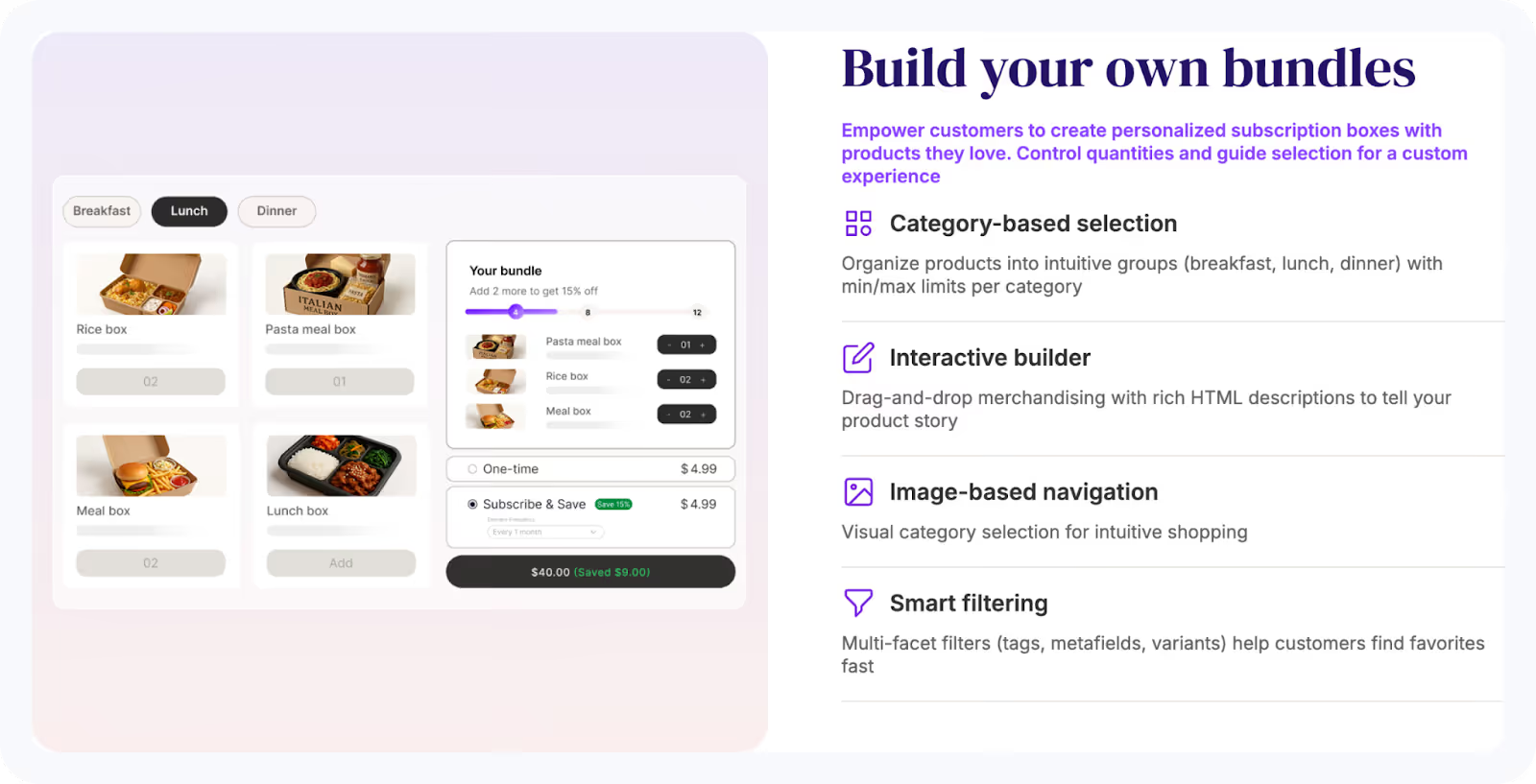
Loop's Bundle Builder sends individual SKUs to Shopify, not phantom products. The pick sheet shows exactly what to pack. Inventory updates correctly.
You configure category rules: minimum 6 items, maximum 12, at least 2 from "breakfast," no more than 4 from "premium." Customers build within constraints. The portal enforces limits. For meal prep, you can display nutritional metadata (protein, carbs, fats, calories) directly in the swap interface.

Loop's bulk actions let you select the outgoing product, select the replacement, and swap across all subscriptions instantly. Connect to Klaviyo and customers get notified automatically. What used to take 2-3 days now takes minutes.
Loop addresses discount abuse with minimum billing cycles (require 2-3 orders before cancel is available), tiered discounts that increase with loyalty (15% orders 1-3, 20% ongoing), and cancellation flows that intervene before customers leave.
KetoChow achieved a 36% save rate on cancellation attempts using Loop's retention flows.
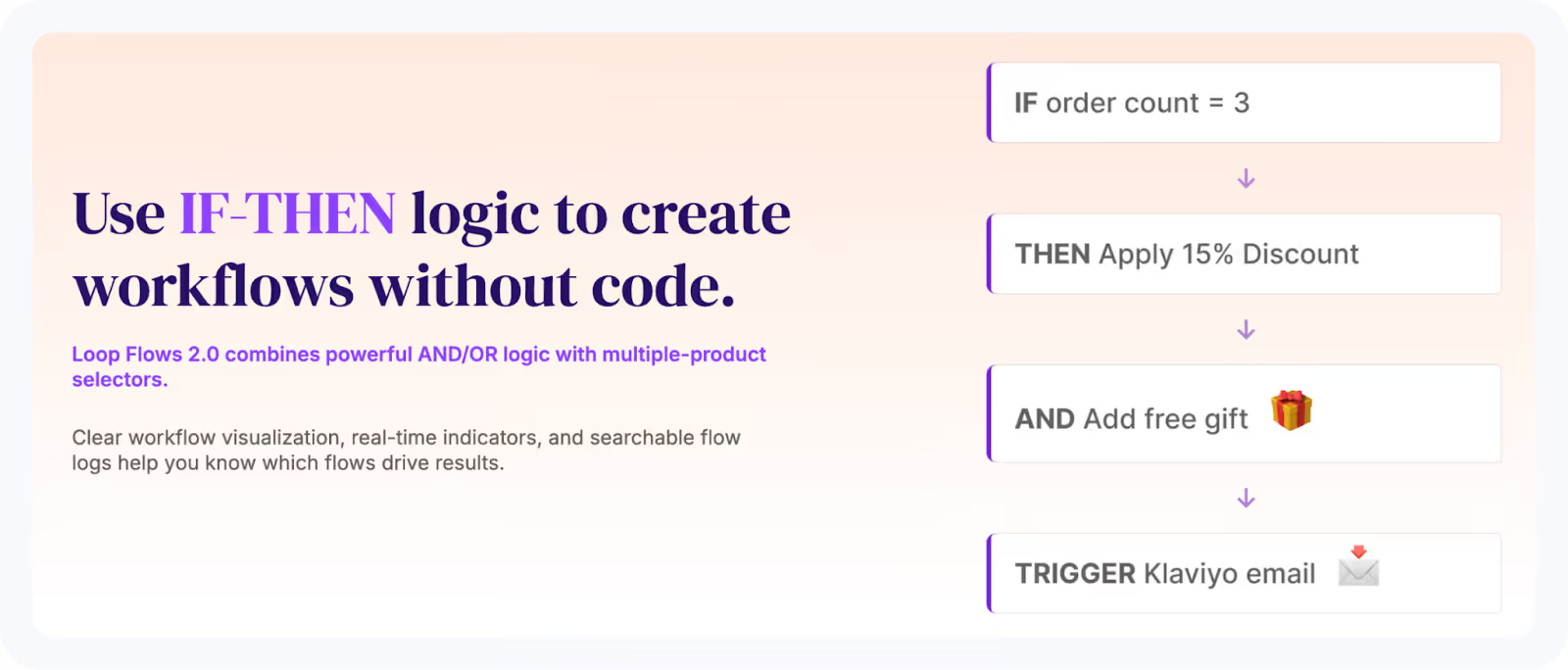
Automated rewards via Loop Flows: The biggest churn happens at orders 2 and 3. Flows trigger rewards at specific moments—free sample at order 3, free accessory at order 5, discount unlock at order 10. Streaks add urgency: maintain 3 consecutive orders to keep your discount tier.
Payment recovery via dunning management: If payment fails Monday and cutoff is Tuesday, you have 24 hours to recover. Loop supports up to 15 retries per cycle, strategic spacing around paydays, backup payment methods, and one-click card update emails.
Targeted upsells via upsell engine: Generic carousels don't convert. Loop creates targeted profiles—coffee subscribers see brewing accessories, tea subscribers see honey, meal prep subscribers see protein add-ons. Profiles filter by order count, spend threshold, and current subscription contents.
The challenge: Customers sign up excitedly, pick weekly delivery, accumulate more than they drink, pause for months, forget about the subscription, and eventually cancel—not because they disliked the product but because they have six unopened bags.
How brands set it up on Loop:
Result: Seven Miles Coffee Roasters saw 150% higher subscription conversions after optimizing their Loop widget.
The challenge: Some products have 4-6 week shelf life—they can't sit in a subscription queue. Most breweries run two models simultaneously: a curated club (you pick) and pick-and-mix (customer chooses). Plus members expect in-store benefits when visiting the taproom.
How brands set it up on Loop:
Result: Highwire Coffee Roasters (similar club model) switched to Loop for better DTC features and portal customization.
The challenge: The most operationally complex category. Regional delivery timing (Melbourne Tuesday, Brisbane Wednesday, Adelaide Thursday) with shared prep days. Weekly menu changes with discontinued items sitting in active subscriptions. Customers ordering 20 items that need to act as one subscription. Macro-conscious customers wanting nutritional info during swaps.
How brands set it up on Loop:
Result: KetoChow achieved 18% subscription growth and 36% cancellation save rate after switching to Loop. They needed API flexibility for custom workflows—Loop's 30+ endpoints delivered.
The challenge: Shipping economics require minimum quantities (can't profitably ship one protein bar), but portals let customers edit down to single items. Customers want variety but have strong preferences ("never send coconut"). Subscriber-exclusive products drive retention but need gating.
How brands set it up on Loop:
The challenge: Customers aren't picking bottles—they're trusting your curation. Pricing is fixed per tier ($75/month for 3 bottles) regardless of individual bottle values. Members expect tasting room perks. Gift memberships are significant revenue.
How brands set it up on Loop:
The challenge: Not subscribe-and-save—every month is a completely different product. January box ≠ February box. Significant gift volume with custom start dates. Add-on opportunities when subscribers engage with the portal.
How brands set it up on Loop:
Looking to set up subscriptions or migrate from your current Shopify subscription app? Get in touch with us for a personalized demo and explore how Loop Subscriptions can help you grow sustainably.