Thanks for the upvote!
Glad you liked this article!

Book your free consultation call. Scale faster with Loop.
Thank you! Your submission has been received!
Oops! Something went wrong while submitting the form.
November 21, 2025
read-content

AOV or LTV: What makes more sense for your subscription?

By
Emma Johnson
By
|

TL;DR

If you're facing low LTV and high churn, prioritize LTV over AOV for long-term profitability. AOV optimization is straightforward—upsells, bundles, and pricing strategies directly increase order value. LTV, however, requires a more comprehensive approach, where churn reduction, payment recovery, and winback campaigns have a far greater impact than upselling alone. The critical insight: a customer who stays subscribed at a lower tier generates more lifetime value than one who upgrades and then churns. Focus on retention tools first when churn is high, then shift to AOV optimization once retention stabilizes for sustainable growth.

1. What are AOV and LTV?

  • AOV (Average Order Value): The average amount spent per order. This is essential for increasing short-term revenue.
  • LTV (Customer Lifetime Value): The total revenue a customer generates over their entire relationship with your brand. This is key to long-term profitability.

2. Why AOV and LTV are Critical for Shopify Subscription Brands

For Shopify subscription businesses, AOV and LTV are crucial for growth:

  • AOV increases revenue per transaction, boosting short-term profits.
  • LTV determines the long-term profitability of each customer, vital for businesses focused on recurring revenue.

If you have high AOV but low LTV (e.g., high churn), your long-term success is at risk. Conversely, focusing solely on LTV without raising AOV might lead to slower growth.

3. Understanding and Optimizing the Levers That Drive AOV and LTV

While AOV and LTV are the metrics you track, understanding the levers that influence each helps you prioritize where to focus your efforts.

AOV: Direct Revenue Levers

AOV optimization is more straightforward with fewer levers to pull. Focus on strategies that immediately increase order value:

Key Levers:

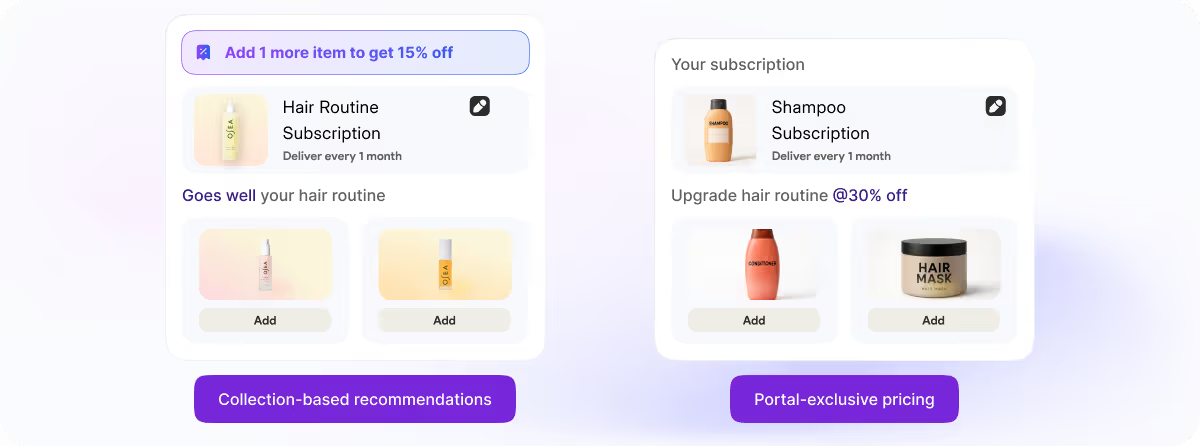
  • Upsells and Cross-sells: Encouraging customers to add products or upgrade tiers during purchase
  • Bundle Strategies: Packaging complementary products together at attractive pricing
  • Pricing Optimization: Strategic tier structures that incentivize higher-value purchases

Tactical Implementation:

  • Strategic Upsells: Present upgrade options or premium tiers at key moments (checkout, post-purchase)
  • Smart Bundling: Package complementary products with compelling value propositions
  • Tiered Pricing: Design subscription tiers that make higher-value options attractive
  • Add-on Products: Make it easy for customers to enhance their orders with relevant additions
  • Personalized Recommendations: Use purchase history to suggest relevant upgrades

Best Practice: Ensure upsells feel like genuine value additions, not pushy sales tactics. The upgrade should solve a real customer need.

Upselling has a direct, immediate impact on AOV—when a customer upgrades or adds products to their order, your average order value increases right away.

LTV: Comprehensive Multi-Layered Strategy

LTV is more complex, influenced by multiple layers across the entire customer lifecycle. While upsells can contribute by increasing customer investment, they're just one small piece of a much larger puzzle.

Key Levers:

1. Churn Reduction
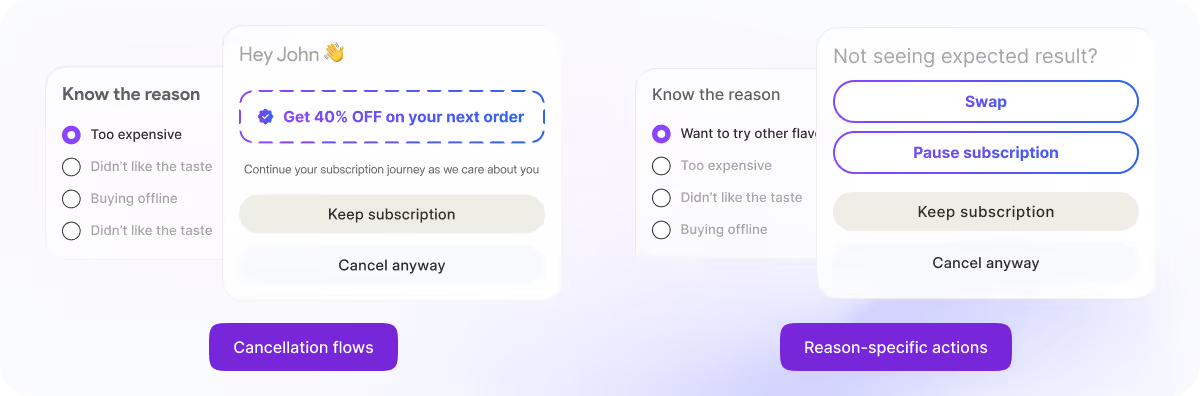
  • Cancellation flows that address specific pain points
  • Proactive engagement campaigns before renewal dates
  • Feedback loops that identify at-risk customers early
  • Flexible pause/skip options that prevent cancellations
  • Personalized retention experiences

2. Payment Recovery (Critical for Involuntary Churn)
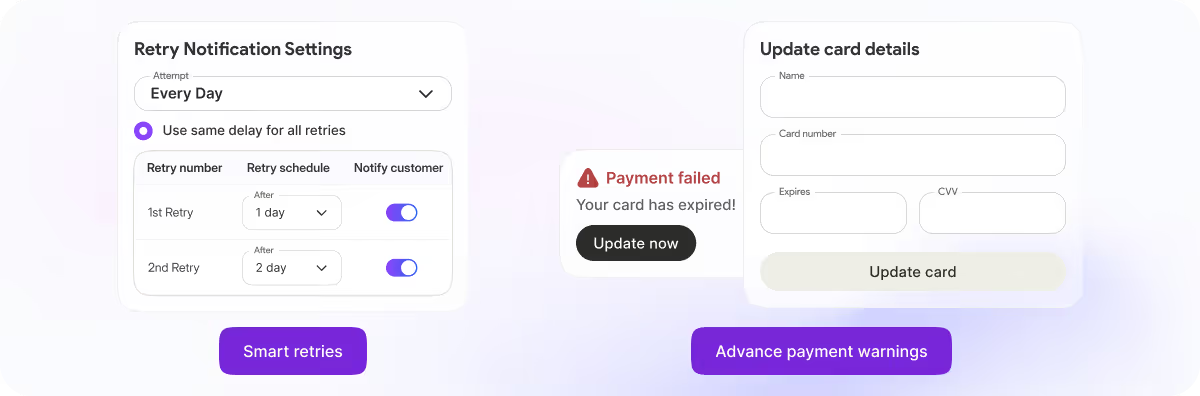
  • Automated dunning sequences for failed payments
  • Multiple payment retry attempts with smart timing
  • Clear communication about payment issues
  • Easy payment method update processes

3. Winback Campaigns

  • Targeted re-engagement for cancelled subscribers
  • Special incentives for returning customers
  • Personalized messaging based on cancellation reasons

4. Customer Experience Optimization
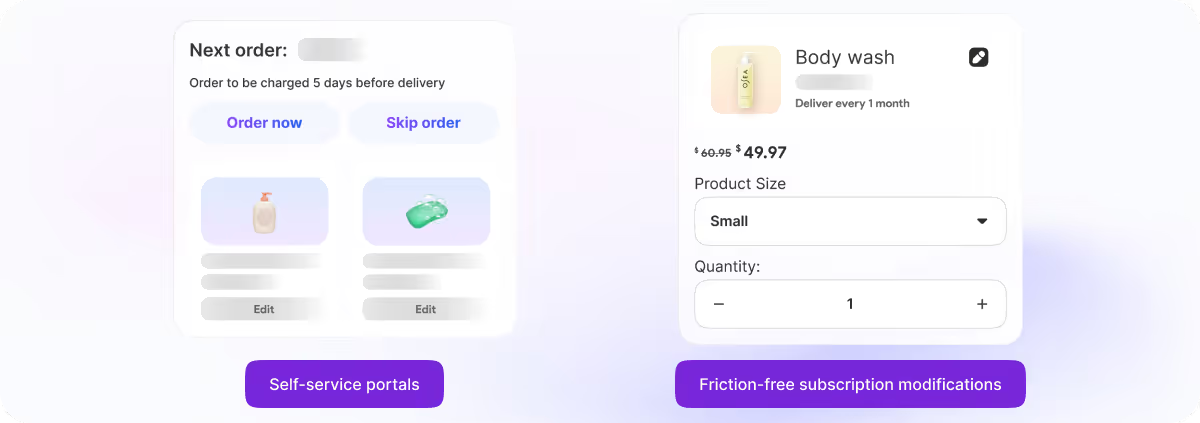
  • Self-service portals for easy subscription management
  • Transparent communication about shipments and renewals
  • Responsive customer support
  • Friction-free subscription modifications

5. Strategic Upsells

  • Timing upsells after positive experiences (successful deliveries, positive reviews)
  • Using customer data to make relevant upgrade suggestions
  • Ensuring upsells enhance rather than disrupt the subscription experience

The Key Insight: While upsells can boost LTV, they're far less impactful than preventing churn and recovering failed payments. A customer who stays subscribed at a lower tier is more valuable than one who upgrades then churns.

The Bottom Line: AOV optimization has fewer, more direct levers with upselling playing a primary role. LTV requires a comprehensive, multi-faceted retention strategy where upsells are just one supporting element among many more impactful factors.

4. When Should You Prioritize AOV?

  • Early Business Stages: Focus on maximizing revenue per order to prove your value.
  • High Acquisition Costs: Offset high customer acquisition costs by increasing AOV.
  • Healthy Retention: If churn is low, optimizing AOV is the logical next step for growth.

5. When Should You Prioritize LTV?

  • High Churn Rates: When churn is high, improving retention through churn reduction strategies, payment recovery, and retention flows is crucial.
  • Strong AOV Performance: If AOV is already solid, focus on retaining customers for sustainable growth.
  • Scaling Profitably: Prioritizing LTV ensures repeatable, long-term revenue, which is more profitable than constantly acquiring new customers.

6. Recap & Next Steps

To drive sustainable growth, focus on balancing AOV and LTV with the right strategies:

  • Prioritize LTV first if churn is high—focus on retention tools like dunning management, cancellation flows, and winback campaigns
  • Optimize AOV once retention is stable to maximize revenue per customer through upsells, bundles, and pricing strategies
  • Remember: Upselling directly impacts AOV but is only one small piece of the LTV puzzle

With platforms like Loop Subscriptions, you can access both AOV-focused tools (upsell flows, bundle builders) and comprehensive LTV features (dunning, retention flows, flexible portals) to grow sustainably and profitably.
7. Frequently Asked Questions (FAQs)

Q: Should I focus on increasing AOV or LTV first? A: If you're experiencing high churn, prioritize LTV through retention strategies like payment recovery and cancellation flows. Once retention is stable, focus on AOV optimization through upsells and bundles.

Q: How does upselling impact AOV vs. LTV? A: Upselling has a direct, immediate impact on AOV. For LTV, upselling plays a supporting role alongside more impactful strategies like churn reduction, payment recovery, and winback campaigns.

Q: What's the most impactful way to increase LTV? A: Focus on reducing churn through automated dunning (payment recovery), flexible subscription management options, and proactive retention campaigns. These have far greater impact than upselling alone.

Q: How can I increase AOV without hurting retention? A: Ensure upsells provide genuine value and solve customer needs. Present them at natural moments (post-purchase, after positive experiences) rather than being intrusive during the subscription journey.

Everything you need to scale your Subscriptions
550+
5.0 star reviews on
Thank you! Your submission has been received!
Oops! Something went wrong while submitting the form.